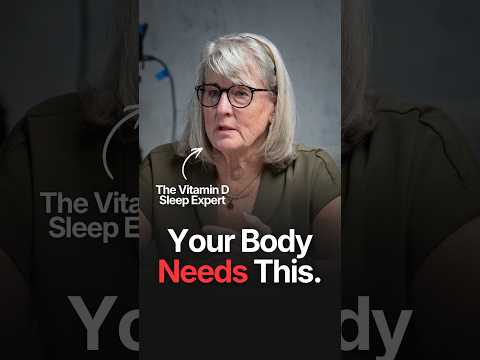
MORE PEOPLE NEED TO KNOW THIS ABOUT VITAMINS
Ask about The Diary Of A CEO
Episode Description
Around 80% of the world is now struggling with sleep, but what if we’ve been trying to fix the wrong problem?
For years, we’ve been told that poor sleep comes down to our habits, routines and discipline...
But Stasha Gominak believes there is a much deeper conversation we need to have about what is happening inside our bodies.
Stasha is a Harvard-trained neurologist who spent more than a decade researching sleep after noticing patterns in thousands of patients. She left traditional medicine because she wanted more time to understand the experiences people were having and the questions that weren’t being answered.
During our conversation, she shared why she believes listening to patients changed the way she understood sleep, health and the human body.
We discussed things like: - Millions of people sleeping enough hours but still feeling exhausted. - The hidden role REM sleep plays in how we think, feel and function. - A surprising link between vitamin D, gut health and sleep. - Modern lifestyles changing the way our bodies recover. - The relationship between sleep, memory and emotional health. - Mistakes people make when trying to fix their sleep.
Stasha's whole point is that sleep isn't about hours in bed - it's about what's actually happening in your brain and body while you're asleep.
If you’ve been doing "everything right" and you’re still waking up exhausted you will take a lot from this conversation.
Read the full transcriptHide the full transcript
- The vitamin world is giving the wrong advice. For instance, if you do not know what you're doing with them, they're
- just as dangerous as any drug you could put in your mouth. The next thing is supplementing with vitamin D is not the
- same as being outdoors [music] because we absorb it through our skin. But what we've been told is don't ever
- let the sun touch your skin. And another example is when we're deficient [music]
- in this vitamin, our brain actually forgets how to sleep. And I know that because I'm a
- neurologist and I wanted to tell the world about what my patients and I had discovered together about making sleep
- better. And billions around the world have a sleep problem, but no one's treating it. And the usual sleep
- treatment is behavioral. Like blackout curtains, go to bed at the same time. But that is not something that's helped
- the people who wind up with me. They've tried all that already. And I've taken care of 28-year-olds who just had a
- stroke. >> 28, sorry? >> 28-year-olds. We associate stroke with being old and having diabetes and
- hypertension and heart disease. No. So then I did a whole bunch of sleep studies because we found some exciting
- things by [music] accident that turn out to have to do with vitamin deficiencies
- and deficiencies that have developed from being indoors too much. [music] And we're starting to feel the effects of
- that. Like obesity. But there there are no obese squirrels in my backyard. The only obese animals are cats and dogs
- [music] that we keep inside. And then we found out most of the sleep disorders are really linked to the gut and
- microbiome. And we could go into that, but one of the interesting thing I learned was vitamin D is a hormone.
- There was a mistake made in calling it a vitamin. >> Well, I'm very curious to learn about
- all of this. And also, you've come up with this protocol called the right sleep protocol. Can you walk me through
- it? >> Absolutely. Here's the first part of it. So,
Brief Summary
Dr. John Doe discusses vitamin D, sleep disorders, and his right sleep protocol for better health.
Key points
- The Dangers of Vitamins. Vitamins can be as dangerous as drugs if misused. Understanding their effects is crucial.
- The Right Sleep Protocol. A new protocol aims to address sleep issues linked to vitamin deficiencies and lifestyle.