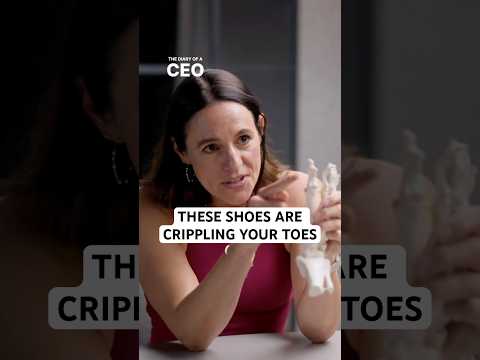
The Foot Expert: Your Toes Can Predict If You’ll Die Early! This Will Fix Plantar Fasciitis!
Ask about The Diary Of A CEO
Episode Description
What if the secret to fixing back pain, avoiding dementia, and living longer is…your feet? Dr. Courtney Conley breaks down why your feet shoes are failing you.
Dr Courtney Conley is a physician specialising in feet. She is the founder of ‘Gait Happens’ and ‘Total Health Solutions’, where she aims to educate people about the importance of the human foot to overall health.
She explains: ▫️How foot pain leads to emotional distress, depression, and inactivity ▫️How 500 extra steps a day can cut heart attack risk by 7% ▫️Why 4,000 steps a day can slash dementia risk by 50% ▫️How Courtney’s overcame addiction and used movement to save her life ▫️Why children’s shoes are sabotaging their future health
00:00 Intro 02:20 Why Care About Feet 05:54 The Most Common Foot Injuries 07:36 What People Get Wrong About Foot Pain 11:36 The Link Between Walking, Longevity, and Depression 19:08 What Shoes Should I Wear to Help My Foot Strength? 25:42 Our Feet vs. Tribe Feet 27:56 Insoles Help Initially but Not Long Term 30:45 1 in 3 People Will Develop Foot Pain 31:24 Pain in the Heel (Plantar Fasciitis) 33:51 Bigger Problems from Foot Issues 35:21 Problems with Wearing Heels 37:42 Characteristics of Good Shoes 39:41 Super-Cushioned Running Shoes: Good or Bad? 43:46 The Shocking Link Between Movement and Dementia 45:03 The Rise of Run Clubs 47:36 The Foot Gym 48:13 Bunion Diagnoses 57:00 Ads 59:03 Importance of Strong Feet at the Gym 1:06:05 What Is a Running Gait? 1:09:49 Are We Supposed to Be Barefoot? 1:17:29 Ads 1:19:30 Should We Wear Socks? 1:21:34 Viewer Comments 1:23:34 What Happens After Ankle Injuries Heal 1:26:45 What You'll Most Likely Regret in 10 Years
👀 DOAC Circle: https://bit.ly/circle-youtube
Follow Dr Courtney: Instagram - https://bit.ly/43mfyoU Gait Happens - https://bit.ly/43EXDZq
The 1% Diary is back - limited time only: https://bit.ly/3YFbJbt
The Diary Of A CEO Conversation Cards (Second Edition): https://g2ul0.app.link/f31dsUttKKb
Get email updates: https://bit.ly/diary-of-a-ceo-yt
Follow Steven: https://g2ul0.app.link/gnGqL4IsKKb
Research document: https://stevenbartlett.com/wp-content/uploads/2025/05/DOAC-Courtney-Conley-Independent-Research-further-reading.pdf
Sponsors: Vivobarefoot - https://vivobarefoot.com/DOAC with code DIARY20 for 20% off Stan Store - Visit https://link.stan.store/joinstanchallenge to join the challenge!
Read the full transcriptHide the full transcript
- I want people to start thinking about their feet because the implications it will have for longevity is massive. But
- there is plenty of things we can do for foot strength and performance. And you can actually do this at home. And I'm
- going to educate you here. There's a lot we could talk about here. That didn't sound like a compliment. Dr. Courtney
- Connley is a worldrenowned foot doctor who's making people rethink everything they know about their feet and the
- shocking truth about their shoes. One in three people will experience foot pain and it really starts to deter your
- physical health, your emotional health, your mental health because you can't do most things. And I know this because as
- a ballet dancer and then a triathlete, I had all of the diagnoses, bunions, nuromomas, heel pain, and not being able
- to walk and not being able to move. You can go to some pretty dark places. But when you look at the statistics, 5,000
- steps a day can reduce the risk of having symptoms of depression and also reduce your risk of all-c causeed
- mortality by 15%. Wow. Here's a bigger wow. 9800 steps can reduce the risks of dementia. So it's the most underutilized easily accessible activity that most of us are not doing. What about footwear
- choices? Footwear has such a big implication on our function. For example, around 70% of children are
- wearing shoes that are too narrow. I've got a range of footwear here that most people wear. So, what do you think of
- these shoes? You shorten the muscles in the back of the leg. What is the issue with wearing these? So, they change the
- structure of the foot. What about this one here? You're going to make me start sweating. So, let's talk about some good
- shoes then. Okay, so these are the things you want to look for in a functional shoe. First,
- this has always blown my mind a little bit. 53% of you that listen to this show regularly haven't yet subscribed to the
- show. So, could I ask you for a favor before we start? If you like the show and you like what we do here and you want to support us, the free simple way
- that you can do just that is by hitting the subscribe button. And my commitment to you is if you do that, then I'll do
- everything in my power, me and my team, to make sure that this show is better for you every single week. We'll listen to your feedback. We'll find the guests
- that you want me to speak to and we'll continue to do what we do. Thank you so much.
- What are we getting wrong? And at what stage in our life do we get it wrong? It feels like you have a little bit of beef with
- shoes. A little bit. A little bit of beef. I've got a range of different shoes here. But what is it that we're
- being sold or told that is fundamentally not aligned with what it is to be a healthy, strong, happy human? I always
- say that if we started with our children and put them in the right footwear, I'd be out of a
- job because that's when it starts. That's when the foot starts developing and that's when we start to build strength and you know structure to the foot and from a very young age we start
- interfering with what goes on the foot. And when you think about all of the things that the foot can do, it's why I'm obsessed with it. I mean, there's bones and ligaments and the foot should
- be designed, it's designed to move. The arch recoils, so it should lengthen, and then it should contract. There's four layers of muscles in here. So, when we look at the function
- of the foot, we have to respect that. And I think footwear can deter the function of the
- foot. So is the is the biggest risk just make sure I'm super clear that I will fall when I'm older. Is that the key
- risk? I mean I don't I think that is one of the squella of what's going to happen
- if we don't start paying attention. But when you look at function as a whole, things like walking, one in three people and probably over the ages of 45
- will experience foot pain. Yeah. So, other than low back pain, there's really no other diagnosis that you'll see those types of numbers. And here's the here's the issue
- with foot pain. You can't do much. You can't go for a walk. You can't go for a hike. You can't do most things. You can't walk to the mailbox when you have severe foot pain.
- So, it really starts to deter your physical health, your emotional health, your mental health. So, it's one of those things I'm extremely passionate
- about because it's not just about pain. It's about what happens when you can't walk and you can't use your foot. And is it is the foot connected to the ankle which is connected to the correct half
- which is connected to the back. Is there sort of a whole body um holistic issue here? Is it all interconnected? Yes, 100%. Especially when I see you
- know patients that have bilateral symptoms of their feet. So that would be both sides. Okay. So, for
- example, if I see someone with bilateral bunions, okay, which would be the bump on the inside of the big toe. Yeah. Okay. You have to ask
- yourself, where is this abnormal load coming from? Let me just check my bunions.
- Yeah. Check. Check. Yeah. Right. Where is it coming from? Is it, you know, is it a something that has to do with the pelvis? Right. Because when I'm standing, if I tilt my pelvis forward, I
- should feel my arches drop. Mhm. So there's a direct correlation between what's happening at your hips and your
- pelvis and what happens at your foot. And when I were to tuck my pelvis, you should feel the arches
- lift. So when we start to see things happen at the foot, it's a window. It's a window to what's going on, not only at the foot, but everywhere else in the kinetic chain. When patients come to
- you, what kind of symptoms do they have that are connected to the foot? Bunyions, nuromomas, hammer toes. What's
- a nuroma and a hammer? So, a nuroma is a nerve irritation. Yeah. In between the toes. So, the mo the most common you will hear of is a Morton's nuroma, and
- that's typically in between the third and fourth toes. Okay. And it can be very painful. Remember we talked about
- when you go to push off when you're walking? Yeah. The wider and the stronger the forefoot is, the more
- stable it is. So, if I have a foot that doesn't have spllay or that looks like this and you're trying to push off of it, you can irritate the nerves within
- the forefoot. Okay. And you can develop these nerve symptoms at the forefoot. Very painful. What are the are the other types of sort of injuries or symptoms that people come to you with that you
- then root back to the feet? Hammer toes. Hammer toes, which is the clawing of the
- toes. Oh, okay. Yeah. Right. And this is what's cool about the foot because it's the only place in the body where you can
- see aarent loads. What does that mean? Abnormal lo dysfunction because you can't see it at the knee. You can't see it at the hip unless you were to take imaging where you'd start to see
- structural change. But you can see it at the foot. So, you should be asking yourself, man, why am I developing
- hammer toes? And maybe I should pay attention to that because bunyions and hammer toes also will increase your risk of falling
- and also decrease balance. That's a problem. I had um planttoitis, which meant that I struggled to walk for a couple of weeks uh a few years ago when I was training for a football match. And
- that's really what started me on my journey of understanding the foot and trying to understand how to strengthen
- it. Yeah. So that I could be more active. Cuz if you've never experienced planttoitis, which I'm sure some of my
- listeners have, it really is a awful awful thing. What are what's the the rest of the list of those kinds of
- injuries that people can get from having a weak foot? Is there anything else that we haven't covered? Well, plantar fasciopathy is probably the most common.
- That's your heel pain. Okay. And I do think that that is a diagnosis that we need to look at a little bit differently. Achilles
- tendonopathy also very very common. Um other tendon diagnoses posterior tibialis tendon. So that's the tendon that runs along the inside of the foot and it's one of the biggest
- stabilizers of the medial column of the foot. It's a powerhouse that in the soius which is your calf lower the calf
- muscle powerhouses of the lower leg and all of these tissues can be strengthened
- and produce power and we need to start looking at the foot just like we look at every
- other part of the body. So what do you do for a living and who are you? Um well I'm a chiropractor by nature. Um I went to chiropractic school.
- Um, you know, I knew that I wanted to get into some type of medicine that was proactive, you know, not reactive. I didn't quite have interest in surgeries
- or pharmaceuticals. Movement has always been a very big part of my life. And so,
- I knew I needed to stay in that in that arena. So, what did you do? When I was younger, I was a dancer. I was a ballet dancer
- and then I shifted gears into being a runner and then a triathlete and I didn't know at the time
- why movement was a necessity for me. You know, I certainly wasn't thinking, oh, you know, I need to do this because of longevity or because I'm going to have a better V2 max, you know. And now in
- hindsight, when I think about it, it was a means of survival. Mhm. Uh movement was survival for me. And in my teens and into my 20s, you know, I had some
- personal demons that I fought. And the one thing that was consistent that I felt I could control was making sure that I stayed moving. And the
- problem is is when you have foot pain, you can't do that. And because movement was a was a lifeline for me. It was a mode of survival. There were days where, you know, I was a dancer. I had all of
- the diagnoses we just talked about, bunions, and nuromomas, heel pain, and when you tag on day after day of not
- being able to walk and not being able to move, you can go to some pretty dark places.
- And so I just it was a mission of mine to figure this out and figure out how I can personally be able to continue to move but then also be able to hopefully
- help other people. It got tough for you, didn't it? I can see it in your face. Yes. Because for this to matter this much to you, then it's it's personal to say the
- least. It changed my life. when you're, you know, I think whenever we have a passion, there's always this quest personally behind it. And so I
- saw what it did for me and then over the past 20 years being able to see what it
- has done for my patients is why I'm even more hardpressed to get this information
- out there. Walking, yes, we don't do much of that these days. It seems to have gone out of fashion with all the Ubers and the other ways to to get around and all the sedentary uh
- behavior that we do living in living and working in offices. What what should we
- know about walking and how important it is? Because I'll be honest, I don't walk that much. Yes. It's um I always say
- it's the most underrated, underutilized, easily accessible activity that most of
- us are not doing. If you think about if you look at the research on average step count that
- most people globally are taking, it's about 45 to 4,900. Okay? Which means that there's a lot of us that are taking less than
- that. So when I'm working with my patients, we always look at baseline numbers. What's your baseline?
- So, for example, if you had a person who was walking 2500 steps a day, I mean, some of us would be like, "Wow, that's not a lot." But for a lot of us, it
- is. If you were to walk an additional 500 steps in a day, your baseline's 2500. You can reduce your risk of cardiovascular mortality by 7%.
- Wow. Here's a bigger wow. If you have a thousandst step increase, you can reduce your risk of all-c causeed mortality by 15%. Dying of
- anything, all-c causeed mortality, 15%. That's a big number for a thousand steps. So, I I have a story for you. This is a patient of mine and it just, you
- know, it warms my heart to talk about him because when I saw him, he was 2 years into a diagnosis of heel pain, 27 years old. So, he had um gone to see a bunch
- of people and the last doctor that he had seen told him to limit his step count to 2500 steps a day. Why?
- to rest to rest the foot. Now, this is chronic pain. Now, we're not talking acute heel pain. We are two years into this song and dance and he's being told
- at 27 years old to take 2500 steps a day. So, he comes into my office, we're talking about all of this, and he's also a quadruplet. So, it was one of the first
- quadruplets I think I've ever treated. So he has um you know which why I think pain is so
- difficult. It's so complicated because now you have this 27-year-old who's seeing his siblings who are at 27 like
- enjoy their life and doing all these things and he's being told he can take 2500 steps a day. So he's now living in
- his father's basement and he's afraid to go above 2500 steps. And he used to tell me, he's like, "I cry a lot. I'm
- depressed." And wouldn't you be if Yeah. So there wasn't any magic exercise that I was going to give him two years into
- this. There wasn't any magic orthotic or magic shoe. He had done all of that. Shame on me if I would have done the
- same thing. So, we had a conversation and I knew I needed to get him outside and I needed to get him walking. That
- was my goal. Forget about the heel pain. We didn't even focus. We didn't even talk about the heel pain. I knew I
- needed to get him outside and start loading his foot. Two years. This foot, by the way,
- when you're walking, four to six times your body weight. It can handle four to six times your body weight when you're walking. but you don't load it
- appropriately and muscles atrophy. So I told him, we had a long long conversation and I said, "We're going to slowly start to introduce
- steps." And if you think about this, if we were to say add a thousand steps a day, to some people that might not sound like a lot, but to someone who's taking 2500 steps, that's almost 50% of what
- they're doing. So we introduced the concept of a micro walk which is a five minute walk. So a five minute walk is about 500
- steps. Okay. A 10-minute walk is about a thousand about a thousand steps. Okay. Right. So that makes it like a little more digestible. Right. So you're talking to him. And you're like, "Listen, all I need is 5
- minutes." And so we started five minute walks. And for the first couple weeks, it was, you know, there were good days, there were bad days, and there still are, but we were starting to build his
- confidence in movement. We were starting to get him comfortable on his foot again.
- And it was, you know, it was one of those cases where I just like I I really enjoyed working with him and watching what had happened because if you look at step counts, I
- knew what number I was trying to get to because if you look at um depression, for
- example, 5,000 steps a day can reduce the risk of having symptoms of depression. Mhm. If you get to 7,500 steps per day, it
- can reduce the prevalence of the diagnosis of depression. So that was in the back of my head. I'm like, we just got to keep working towards these numbers.
- So while we were doing that, we were strengthening his foot. I had him in different footwear. And at the end of each week,
- we were also talking about three good things. tell me three good things that happened to you this
- week. And in the beginning of treatment, it was it was a struggle, Stephen. It was a struggle for him to think about
- good things happening in his life. And um I I spoke with him probably about a month ago and his email is like my why. He was
- like um on average he's walking between five and 6,000 steps a day. He still has good days or still has
- bad days, more good days than bad days. But he said to me, he's like, "I haven't
- I can't tell you the last time I cried. He's going to church. He's spending time
- with his dad, you know, and it's not it's not the step count, it's the person behind the step count. And that's why I think this stuff is so powerful. I saw it change my life. I saw
- what it does to my patients. I mean, it has the capacity to improve not just your physical health, but how you interact with the world. you
- it has a completely different meaning when you understand the real sort of human consequences it can have on
- someone's life for better or for worse. [Music] Um and it's and it's not often until we
- have some kind of injury or issue that we yes realize that our feet and ankles were were there. Yes. And that certainly
- been the case in my life. It wasn't until I got planticitis that I was like oh my god I should have been doing something about this sooner. And then as
- I told you before we started recording I've currently got a high ankle sprain. So, I've pulled some ligaments in my the top of my ankle training for this game
- called Soccer Aid. So, I'm now going through the whole process once again of like figuring out what I did wrong and
- what what I should have been doing as a preventative measure to try and strengthen my feet. One of the things I
- think most of us get wrong is our footwear choices. Yes. And I've got a range of footwear on this table in front
- of me here. These are the types of shoes that most people wear. Um, from a very young age, I think we all wear shoes
- like this. Yes. Narrow shoes with a big heel. If anyone can't see our conversation at the
- moment, it's like the the typical trainer. What is what is the issue with wearing these from an early age? When I was doing research to have this
- discussion with you, it was fascinating to me when you look at the statistics of especially with um children, with girls,
- around 70% are wearing shoes that are too narrow. Too narrow. The end part. Yes. Yeah. Remember we talked about the widest part of the foot should be the toes. Mhm. So when you look at a shoe
- like that, that is not the widest part. It's tapered. See how the toe box looks like it's tapered? Yeah. It's point like correct. Yeah. So when you put your foot in there, it's doing this. Mhm. It
- changes the structure of the foot. It's like the lowest hanging fruit for me is just wear a shoe that fits your
- foot because when it's in that position, it changes the structure. If I walked around with uh my arm in a sling for 10 years, would my bicep get weak?
- Yeah. Your mo you'd lose your mobility as well. Correct. If you don't use it, you're going to lose it. And so that's
- why I think footwear has such a big implication on our function. Men's dress shoes. Men's dress shoes. I mean, that is crazy. The point on that.
- Yes. It's funny. My um brother lives in New York City and we have this conversation all the time and he's like,
- "Look at this one. It's wide." I'm like, "Nope, that's not wide." Right. And they're stiff and they're, you know,
- again, changing the structure of the foot. A lot of those shoes also have a little bit of a heel to toe drop. Yeah. Yes. So that is when the heel to toe
- drop, so the heel and the toes sit in one plane. But when you have a higher heel to toe drop, it's like you have a
- mini high heel on. Yeah. And what's the problem with that? Well, if my foot is supposed to sit flat, I have tissues in the back of my
- leg that are in a good length tension relationship. I have even pressures across my foot. Yeah. The second I go and change those things where I go into
- a heel, you put additional pressure on the front of the foot, you shorten the muscles in the back of the leg. So you
- start changing the the function and the structure of not only the foot, but everything that sits above it, your your
- calf, your hamstring, your back. Do you see a lot of back injuries that are relating to things like heels and
- Yes, you do. Mhm. It's all, you know, I see mostly people come in for foot pain and I always say to my patients, I wish
- it was just about the foot. I wish I could just look at your foot and say, "This is what it is. It's all right
- here." But it's not because there's a body that sits on top of the foot. The strength of the hip, for example, controls the foot. It controls
- how the foot unlocks. So, you have to take that into account when you're looking at patients with foot pain.
- But this this is the shape because it's fashionable, right? Yes. It's my biggest, you know, I always tell my
- daughter cuz my daughter, you know, she's like, "You make me wear these platypus shoes." And I'm like, "Listen, it's function over fashion." But I get
- it. That is my biggest challenge is making, you know, is looking for shoes. But they've come a long way. They're they've come a very very long way and I think that uh we're getting there. Is
- there an issue with the thickness of the heel on these shoes? This big When I say
- the thickness of the heel, I really mean the thickness of the sole. So the cushion and the the cushion. It's I mean
- it's really really soft soft and cushiony and there's about you know an inch at the back here of soul. Yeah. Um
- the cushion conversation is always very interesting. Um, there's always a trade-off. So,
- there's a lot of popular shoes right now that have a lot of cushion on them. Yeah. And it's hard to argue when
- someone goes into a store and they're given this shoe that has this pillow on it and they're standing on it for 3
- seconds and they're like, "Man, this feels really good." The problem with cushion is that the more stuff
- that's between your foot and the ground, the less you feel. So, there's a loss of
- sensory acuity. There's a loss of sensory perception. Remember, the foot is, imagine the foot's a sensory organ.
- And it is because there's thousands of receptors that are, you know, screaming for information to help keep us upright in a biped. So, when we start interfering with how that foot feels,
- you can expect there to be problems. Now, if you have someone that's standing in place all day long, right, on concrete, on man-made surfaces, there's a time and a place. But my
- non-negotiable is at least keep the foot in its functional position, which means a wide toe
- box. So, you want to stand on concrete all day long, fine. Put a put some cushion underneath your foot. Help yourself out. That's okay. But at least allow those toes to spllay so that you
- can have balance. You can have your foot in a position that can propel you forward. I was just thinking about my foot as you're talking and I'm pretty sure like my I'm pretty sure like my
- pinky toe looks I'm not going to be able to sell pictures on only fans of my feet because
- my pinky toe is kind of like crumpled in. It like curls under, right? Yeah. It's like curled under, right? Kind of looks like a shoe. like you had a shoe
- there like Excuse me. No, no, but you're right. It is. It is like that. Um it's kind of like been pushed pushed in and underneath and I guess that's not natural. No, it is not. How does a
- natural foot look like? Have you been to see a tribe who who don't wear these cushion shoes? Have you seen what like a
- un cushioned foot looks like? I'm obsessed. I watch people's feet all the time. I was just in Bise with my mother and daughter for spring break. It's slightly creepy. Sorry. It is, isn't it?
- And you're looking at people's feet on holiday. I'm always looking at people's feet. Uh because it tells a story. It's
- like someone's gate, you know. Watching someone walk tells a story. you can tell if they just got fired or if they just
- got promoted, you know. But when you look at someone's foot, I was in Bise and with my mom and daughter and um
- there were these two guys building a house a little bit off the beach barefoot and I'm looking at their foot
- and I'm going, "Wow, it was wide. It looked thick. It looked flat." And you know, I think in our society, if
- you will, when we think of a flat foot, we think, "Oh, this is bad news. We better go get an orthotic." An orthotic
- is a um a device that you put underneath the foot to help um modify loads. Uh what do they call those in the UK? Um insoles. Like an insole. Okay. Yes. And
- so I'm watching these guys build this house and they're like coming up on their toes and they have all this, you know, toe range of motion and all this
- strength and power to their foot and I'm like that's that's what our foot was designed to do is to be strong to support. It's like building a house on sand. Yeah. You have to have a
- foundation that you can build upon. And it was really cool to see. It really was. When I had that pain in my foot, which they told me was plantificitis,
- they recommended that I go to some foot doctor person. And this foot doctor person measured me up for insoles. Yes.
- And I put the insoles in and then I took the insoles out and instead of that, I just wore different shoes. Yeah. A lot of people's first sort of diagnosis and
- the thing that they're told to do whenever they have foot pain or back pain or whatever is go get some insoles.
- Is this what you think we should be doing? Because it's really really common. It's like it seems to be the the
- like in medicine they throw pills at you if you have certain symptoms. It seems to be the first thing that we do when someone has a foot problem or an ankle
- problem. First line of intervention is that's why I I you want to change how we're viewing the foot. It's either if
- your foot hurts, here's an orthosis, which is a a foot orthotic, an insert. Yeah. or if it hurts worse get
- surgery. If you look at the research on planner fascitis, okay, so itis being acute, it will tell you that putting an orthosis or something to modify the load
- underneath the foot can be beneficial initially because you want to offload something that hurts. Yeah. But if you don't use it, you're going to lose it.
- So what they're not the part of the conversation that's being missed is the and conversation. It's wear this insert
- and strengthen your foot because the goal should be to have an exit strategy for the insert and get your foot back on the ground. Because I
- have patients, Stephen, they will come in with 20 pairs of orthotics, 20 pairs of
- inserts. They've tried this one, they've tried that one, they've tried different shoes, higher heel totoe drops, more
- cushion, and I'm sitting there going, we're missing the boat here. Let's have the and conversation.
- One of the muscles that is a good predictor of having heel pain, okay, is it runs parallel to the planar fascia. So it's flexor digtor and brevis. It
- basically takes the four toes and presses them down. There's ways you can assess for
- this. So we'll look at their toe strength and then it almost always correlates with the side that has the heel pain on because it it shouldn't be one of those conversations. You're like,
- man, I wonder where this came from. No, your foot is weak. Your foot is weak. There's a lot of load going through it
- and the structures are, you know, getting beat up. There's something Daniel Lieberman said to me which I've
- never forgotten. He said, "If you took a child and you put them in 2in thick gloves from the day that
- they were born and then you took those gloves off at 30 years old, can you imagine how deformed their hands would
- be?" Right? And that's like very much the way that we live our lives. We spend pretty much all day wearing these big
- cushioned shoes that sometimes have these heels on. So, it's no wonder that so many people are getting foot
- problems, ankle problems, back pain. Yeah. So, one in three people, one in three people. Foot pain. I mean, it
- is it really is a statistic that we need to be paying attention to. We use this word planttoicitis, but we didn't
- explain what it is and what the symptoms of it are. Is it essentially like pain in the the heel of your foot? Pain in
- the heel. So yes, and they've played around with, you know, the terminology being it plantar fascitis, so more of an acute issue versus plantar fasciopathy
- because often times these cases will turn into, you know, having heel pain for very long periods of time. Yeah. So
- then you have to treat it differently. You don't treat something that's acute the same as you would treat something that's chronic. And so you have to look
- at how can I build the resiliency to the foot. How did it happen? How did all of this happen? How did planticiitis happen? Like, how did I get it? So, I'll tell you what I was doing.
- I was living my life as normal. Yeah. And then I started training to play for this soccer game and I started training
- several maybe twice a week. And then maybe by week four or five or six, I get this horrific ongoing pain which lasted throughout the entire day. Yeah. where I
- couldn't walk easily. It was especially bad in the mornings and uh yeah, I thought I'd like broken something or
- ripped something in my foot. And when they told me that it was planttoicitis, I'd never heard that term before. But
- understanding what I did there, how did I get it? When I see I hear very similar
- stories with that diagnosis, there's always there always seems to be some impetus of I I added load too fast too
- soon. Mhm. I went on a longer hike. I This was one of my favorites. Um I went barefoot during COVID around my house and everybody wanted to blame the fact that, you know, don't ever go barefoot.
- And I was like, maybe it's just cuz your foot was weak and you weren't ready to handle these loads. You add loads too
- fast, too soon, and the foot just says, "You know what? You weren't ready to give me this
- amount of load this quickly." Okay. And that's, you know, when you asked me earlier about
- um why do we need to pay attention to our foot strength? Is it just because, you know, we're going to we want to
- prevent falls when we're 70? This is the why. Because we want to have healthy feet, strong feet, so you can say, "Hey, I want to go play a soccer game and I don't want to worry about having planner
- fascitis in my 30s." Mhm. Or I mean, now with this this ankle sprain that I have,
- Yes. pulling my ligaments which takes you out of activity for so long which is horrific. That's like a big part of this
- which is if you get an injury if you get a bad injury if you get like an Achilles tendon issue or the you tear a ligament
- like I have or even planttoitis the inactivity that stems from that causes a bunch of downstream issues. So my muscles are going to atrophy. I'm going to lose muscle over this next
- couple of weeks in my lower half. I'm going to get probably a little bit lopsided because the injury is on my right side. So now my left side's having
- more of the burden. Uh my my lower legs, my upper legs, my lower back is probably
- susceptible now to some kind of injury as well. And it feels like, you know, this down downward spiral of injury just
- because I didn't strengthen my foot. What do you think of these shoes? These are women's heels, but listen, anyone can wear them. It's 2025. Um what do you think of these shoes?
- Well, it doesn't look like a foot. Your foot in that position is not the position it is supposed to be in. Now,
- with that being said, there is a time and a place. You know, I don't think I'm going to win the battle of, you know, you need to wear, you know, functional footwear 24 hours a day, 7 days a week.
- Time in those shoes should be limited just like with, you know, other things. It's moderation. Do you see a lot of
- women getting injuries because they spend too long wearing heels? I don't know if acute injury but but a weakening of tissue. Yes. Because, you know, I
- live in Colorado now, so I don't have that uh there's not too many women in Colorado that are wearing heels.
- However, when I go to New York City, it's a different conversation, different environment. M so you know I have to say
- I have to use the that is not the position that you want to keep your foot in. It's changing the structure of your
- tissues changing the pressures in the foot. Not to mention that those aren't I don't I
- don't care what anybody says that's not comfortable to walk around in. People will be like I'm really comfortable in heels. I'm like are you really though?
- The lengths we go to to look good though. Right. That's right. Okay. So let's talk about some good shoes then. Okay. I've got two pairs of shoes here.
- Okay. One of them is Vivo Barefoot, who are actually a sponsor of mine ever since I
- s started talking about feet. Um and then I don't know this brand. What is this brand? That is Ultra Running.
- So, let's talk about um the things you want to look for in a functional shoe. My non-negotiable is the wide toe box. The toes have to be able to play.
- When you think of all the diagnoses that we talked about, bunyions, nuromomas, hammer toes, when the forefoot can
- spllay, the foot's going to function better. So that's number one. Number two is having the heel and the toe in the same plane. And number three is having a shoe
- that is thin and flexible. When you wear this type of footwear, I call this a workhorse shoe because there is more loads going
- through all of your tissues, through your bones, through your ligaments, through your tendons, through your
- muscles. So, your foot gets stronger when you wear this type of footwear. There's research on that. Now, you have to earn your right. This
- is the plantar fasciopathy conversation. You can't go from wearing a um aggressive high cushion shoe like this one here with and yes with an insert for
- example and say oh this stuff makes sense I'm going to go take that off and I'm going to go wear this 24 hours a
- day. You won't like me. Why? Because you'll say hey my heels hurting because you haven't done the work. It's hey let's do these foot exercises. Let's
- wear this for 10 minutes a day. And then people are like, "Wow, that does feel better." And then it's a transition into
- wearing this more often. Now, when you have patients that have had a a very weak foot or clients that have had a very weak foot with different
- diagnosis, this is a hard, you know, shoe to walk around in for extended periods of time. So, that's when we'll talk about footwear that still puts the
- foot in a wide position. wide toe box. I love this shoe. And I also like the mesh
- upper because you can the toes can expand in here. I still have zero drop, right? Where the heel and the toe sit in the same plane, but you'll notice the difference between the two shoes is
- the amount of stack height or the amount of cushion. There's more stuff. Yeah. So on
- this on this shoe the it does look like the you call it plane looks level. Yes. Okay. And it's got a good toe box. You can see from this side that the toe box is wide so
- you can play. But it is elevated. It's elevated off the ground. Yeah. But the heel and toe are in the same plane. Okay. Fine. But it it's it's still elevated though. They're still like
- quite a thick Yes. That's not too much of a problem because it's still depends on what your goals are. If I'm running,
- that is that is a I think a great shoe to run on, to run with, right? If you're running on concrete, if you're running on asphalt, you want a little something underneath the foot.
- What about the Nike Alpha Flies, which is my You make me start sweating. Really? Uh uh this is my current running shoe and I bought it because it looks great. Yes. I
- mean, you know, it is it's I have torn the the ligaments in my in my ankle, but but I look good. Here's the super shoe, right? So, here's this shoe, right? And here's your super shoe over here. Yeah.
- Okay. When you look at that shoe, there's certain characteristics to that shoe that you definitely do not see in
- this shoe. One of them being the toe spring. So, see how it kind of lips on the front of the shoe? Yeah. Okay. This part here. Yeah. Yes. So, if I had that shoe on this table and I went like this
- to the front of the shoe, it would literally rocker for me. Mhm. So, it facilitates the rocker of the foot.
- Sounds great. You put that on, you're like, "Man, this is great. I can fly." If you don't use it, you're going to lose it. So, there is research that
- shows when you put your foot in a position with toe spring, you will weaken the intrinsic muscles of the
- foot. So, I'm not saying don't have race day and wear that shoe, right? You get the research will tell you two to four% running economy. People run faster because the shoe has
- the technology to facilitate gate. But if you train in that all the time and you never let your foot get stronger, it's just a matter of time. You're going
- to say, "My hamstring, my foot, my this, my that." And it's like we that's why the conversation has to happen is this is the shoe that you're going to get stronger in. Spend time in your training
- shoe. And then that's your speed day. That's your race day. So it's having the shoe spectrum, knowing when to dance along the spectrum. I feel like I can bounce in these.
- I mean, you probably can. I literally when I put it on, I was like, "Wow, I can bounce." I think it has like a piece
- of metal going through the middle of it. carbon in there. You know what another fun fact is though? Certain plyometrics,
- so plyometric is training the spring of the body. So think like jumping. There's research that will show
- you that plyometrics also increase capacity in running by 2 to 4%. So my conversation I have with my patients is listen, what if we stacked therapies, right? What if you did plyometric work
- which is uh jumping? Yeah. you know, once or twice a week and we worked on your strength and I had you in these shoes the majority of the time and then
- on race day you want to throw that shoe on. It's like you're you're a running you're like a running fairy. You're like
- running and things look beautiful and everything is, you know, because you have a strong body on top of the shoe.
- But if you put a weak body and a weak foot in that shoe, you got to earn your right. Should
- we be standing more often? Because most of us work and live in offices now and we sit at desks and I I you know I do
- this podcast sat down. Do you think much about standing desks or how often we should spend bipedal or I think that's
- what you refer to as I think that it's more about movement. Okay. I don't know if standing in one place is any better
- than sitting in one place other than when you're standing you can actually like you know move around and you know
- make it more active standing but it is a matter of taking movement breaks like that's I call them you know movement snacks all of us spend a lot of time either sitting all day long or you know
- standing at our desks if we were to take micro walks a five minute walk a couple times a day.
- The system stays moving. You're staying active and you're slowly, you know, inching up that step count that we know
- is so important for not only physical health, but emotional and mental health. That's what I like about it. I think you
- mentioned there was an association with movement, walking, and dementia, Alzheimer's risk. What What does the science say there? You know, when you look at step counts, if
- that was going to be our baseline, 9,800 steps per day can reduce the risks of dementia. But what I think is the cool part with that is 3,800 steps, you get 50% of the maximal
- benefit. So, if you were to, let's just call it 4,000, shoot for 4,000 steps, you're going to get a benefit,
- a 50% benefit. And some of my favorite research on looking at that population with walking is relationship walking. There's really cool studies um
- looking at walking in groups for the elderly population and how that has a social
- connection and it improves their emotional health and it combats loneliness and feelings of
- isolation and that is the beauty of a walk. Run clubs are getting incredibly popular at the moment, aren't they? All around the world. Are you seeing more and more people come to you as a result of that? Yes, I think also um you know
- it was interesting. I was working at the running event in Austin, Texas, and I was teaching there. And so, a lot of the
- shoe stores were there, and one of the bigger shoe stores had said that the majority of their clients now are actually walkers and not
- runners. And I thought that was pretty interesting. And I'm thinking to myself, I wonder why that is. Like, are more
- people reverting to walking because they're getting injured when they're running? Are they, you know, I'm making all these conclusions in my head. I'm like, well, is it because we're going in
- the wrong direction with footwear because we're creating this shoe that is basically doing the work for us and it
- feels so good and, you know, people aren't putting the work in anymore. I don't know, but I'm certainly
- going to do my best to change that. You brought me a box which I have Yes. here in front of me. Foot health kit. Yes, that's what it says on the front of the box. Um, a foot
- health kit. I mean, what is in this box? It's like my little like bag of treats. You know, when I started doing this, it was funny. Um, this is what you give people as a bag of
- treats. That's right. For their birthdays and stuff. I want people to start thinking about
- their feet because I I think there's such um implications for their health. And I wanted to make it easy because when we think about all the things we
- need to do to stay healthy, it's like I have to strength train, I have to, you know, eat this. I need to V2 max. I need
- my cardiorespiratory fitness. There's a lot. So, I wanted to make it easy. So I um first what one of the things that that is in there are toe strengtheners.
- So I'll pull them out the box. So those are toe spacers. Toe spacers. Yes. So is this all the same thing, right? Yes. So these are toe spacers. Correct. And then there's this. Yes. What's this?
- Those are toe strengtheners. Toe strengtheners. Okay. So that's my toe workout. There is this thing, a band.
- And then there's this ball. Yes. So this is like this is my foot gym. That's right.
- Can you show me how this stuff works? Absolutely. Okay. So um these are my feet and these are my ankles. So I had
- planttoitis in I believe it was this foot actually and then right now I've got a high ankle sprain which is some kind of ligament here has been torn and they told me that it's torn on all three sides. So, I've been in a boot for the
- last couple of weeks, but I've taken it off over the last week or two, and I was on crutches as well. Um, what are you
- The minute I took my socks off, you became fixated on my feet. Yes. What What do I need to be thinking about? And
- what can you see just by looking at my feet? You know, when you're looking at this foot here, you can start to see this little see this little bump here.
- You can start to see bumps on the top of the big toe. Mhm. Okay. And the diagnosis is a hex limitus or a hex rigidus. And basically what that means is that you have formed um
- arthritis on the top of the toe. So it prevents you from getting that full range of motion that we need when we walk and run. Okay. Okay. If the bump goes out to the
- side, that's what we call hex valgus. That's the bunion. The bunion. Okay. Okay. So that's what why the foot is a window
- to mechanics because you can see loads aarent loads right why is this forming here so you know one of the first things I want to look at is how much range of motion the big toe it's all about the
- big toe when we're walking we put a lot of loads and force that go through the big toe when we walk you should have about 40 to 45 degrees to walk out of
- that big toe. So, here's Eddie. Here's 45 degrees up. Up. Okay. Okay. So, yes. So, what I'll want to see is how much range of motion. Can you see how he's off the ground, though? I want the ball
- of the big toe on the ground. That's a good amount of range. That's the first nice thing you've said about my feet. We're just getting started. I'll find something else. And then you want to
- look at toe dexterity. So in other words, can you isolate your toes? So can you lift just your big toe on the right? Good.
- And then on the left. That's actually quite hard. Like I've never had to do that before.
- It's funny because when you'll see people that have poor awareness to their feet, when they try to lift their toes,
- you'll see them like their hands and like your back isn't going to extend your toe. Okay. Okay. And then put your
- big toe down and then extend your four toes. Yes. No, that pinky is not that's not listening. There you go. And
- here. Okay. And then what I want you to do is you're going to lift up all of your
- toes and spread them. And you can see two, three, and four, right? They don't want to spread as much. Mhm. Earlier we talked about
- those nuromomas. The nuromomas live within the toes here, right? Within right in between the toes.
- So if we have issues with nerve problems here, you got to be able to spllay. So you wear vivos. You know, when you allow your foot to be in a shoe where
- the feet can actually spllay, you'll start to see changes. Mhm. But imagine if you, you know, were in a shoe where your foot I mean I had a I was at an expo working a couple weeks ago and this
- woman came up to me and she's like, "Man, I can't figure out why my foot hurts." And I took her shoe off and I'm
- telling you, her foot looked like this. It look like a shoe. And I took a picture and I showed it to her and I was like, "Does your foot look like a foot or does it look like a shoe?" We don't
- really know the difference these days. No, because remember the widest part of the foot should be the toes.
- So that's what we want to look for in the front of the foot. We also talked about that muscle. What side did you have the heel pain on?
- I believe it was the right side. So one of the things we'll do um and you can actually do this at home. You could use
- like a a credit card. So in my office we can actually measure that. But if you were to do it at home, you just take a card and put it underneath the toe. Okay. Okay. And make sure you're lined
- up here. Yep. And some people will also do that. See how you're like holding your leg just the toe. Mhm. And then
- I'll try to pull the card out from under you. And I shouldn't be able to do that. I should feel some tension.
- And then I'll ask the patient, "Where do you feel this? What's working?" And if they say my hip, my
- quad, it's wrong guy. We're talking about the foot. So you should feel that in the arch of the foot and maybe into the calf.
- Okay. Big toe flexoralis longus. This guy by the way, this muscle starts over here. It's very important to strengthen this muscle when you have a history of
- ankle sprains. Starts on the fibula, which is the outside of the leg. It comes down the foot, crosses under, and
- inserts into the big toe. Then I'm going to take the card and I'm going to put it underneath the four
- toes. The muscle that we're looking for. Yes, that's beautiful. See how you got that little See, that's the second comp
- compliment I gave you about. I'm going to put this underneath your toes. Yeah. Right. Little. Yep. And then don't let
- me pull the card out. And you should feel that in the arch of your foot. patients that have
- I'm not really feeling it to be honest. I'm not feeling it anymore. Okay. Oh, what? Okay, there you go. Roll the roll
- the bottom of the foot like this. Yes. Just wake it up a little bit. There's a bunch of receptors on the bottoms of the
- foot. So, when we can't feel things and it shouldn't surprise us, you know, if we've been walking around in footwear
- that compromises the function of the foot or we've had injuries, you start to lack what we can feel. So, just wake it
- up a little bit. And how long would you do that for in the morning? 60 90 seconds. Do you do this every day?
- Uh, I do. I'll tell you when I like if I'm standing at my desk, I'll keep the ball there. Okay. When I come back from
- a run, I do this whole little setup. But I wear these all day. What is that that you're wearing, though? So, these are toe spacers. So, they do exactly that. They spllay the
- foot. And why are you wearing that? Okay. Remember when I was telling you about my years of being a ballet dancer?
- Okay. Um, inpoint shoes. Uh, I wore orthotics for a long period of time. I wore ill-fitting footwear and my foot was weak and things hurt. Okay. And we talked about why I needed to fix all of
- that. Um, you can see my bunion here. Okay. So, I work on all of this stuff all the time and toes play is a big part
- of that. So when I have these toe spacers in, they spllay the foot for me. Every pair of shoes that I wear um is
- compatible with a toe spacer. Okay. So you don't wear any narrow shoes. Yeah. Non-negotiable. Okay. And this is important. There is a difference between
- a wide toe box and a wide shoe. So people will say, "Well, I ordered the wide." The width will come here. That's where they change the
- width. But if the toes are still tapered, the width has to extend into where the
- toes are. Mhm. So that's where you got to be careful. It's a wide shoe is not a wide toe box shoe. And if you try to wear these in just a wide shoe, you're not going to be comfortable. So if I
- wore this for one year, what promise could you make me or what could you tell me the benefit and the upside would be?
- You would definitely see improvement of display of your foot. Yeah. And when you have the tissues the the spllay, you can start to improve the
- strength of the foot. And what's downstream from strong foot? Go up the chain. You have better toe strength.
- You're going to build a better platform. You're gonna have a jet engine on a jet engine. So, your ankle mobility, then
- your knee extension, your hip extension, because your foot is doing what it was designed to do, which is be mobile and
- be strong. Okay? We need to pay attention. If you if things go south from here, you can expect there to be changes
- up the chain. I see it all the time. This one change has transformed how my team and I move, train, and think about our bodies. When Dr. Daniel Lieberman came on the diio, he explained how
- modern shoes with their cushioning and support are making our feet weaker and less capable of doing what nature
- intended them to do. We've lost the natural strength and mobility in our feet. And this is leading to issues like
- back pain and knee pain. I'd already purchased a pair of Viva barefoot shoes. So I showed them to Daniel Lieberman and he told me that they were exactly the type of shoe that would help me restore
- natural foot movement and rebuild my strength. But I think it was planticitis that I had where suddenly my feet started hurting all the time. And after
- that I decided to start strengthening my own foot by using the Vivo Barefoots. And research from Liverpool University
- has backed this up. They've shown that wearing Vivo Barefoot shoes for 6 months can increase foot strength by up to 60%.
- Visit vivarefoot.com/doac and use code diary 20 from my sponsor for 20% off. A strong
- body starts with strong feet. Is there anything else that we need to be aware of? What is what is this other
- stuff here? You've got like toe strengtheners as well. So before we get to those with you know the big toe and the four toes, this is when you can use
- that band. Okay. Right. So you just put your heel on there. Okay. You grab your four toes. Right. It's like you're doing a
- bicep curl, but you're doing it with your toes. And you press into the band. Then
- you lift up and you press it into the band. There is research, four sets, 12 reps. I mean, these are some of the
- things that they work on to improve function of the foot that helps with planer fascitis. Okay? And then you go around the house
- and you grab the big toe. Keep that ball of the big toe on the floor and then press. Yes.
- Right. And it's it's a good place to start. You're building strengths in your foot.
- And if you want to if you want to really get after it, go for just the little guy. Oh my gosh. Little piggy. Let's
- have a look. It's really wild because the abductor digit, the muscle that abducts the little toe is just as big as the big one. And we like just are like, "Oh,
- that toe is just there to, you know, hit furniture. It stabilizes the outside of the foot.
- What is the difference between someone that does this and doesn't do this? Well, let's start with pain. Yeah, they
- and I I use the word prevent injury. That's tough for me. You want to create an environment where you can have the best opportunity for function. Mhm. So when
- people strengthen their foot, they are going to have a foundation that's going to have resilience to the rest of their system. This is what we we walk
- on. You cannot um build a jet engine on a paper airplane. I'm working with a lot of, you know, athletes right now are getting
- bigger. They're getting stronger. They're getting faster. And if you look at the rates of injuries at the foot,
- they're going up because we know the amount of loads that go through the foot when we walk and when we run. So if we want to do a bunch of squats and do a bunch of deadlifts and do all the sexy
- stuff, but not pay attention to the foundation on which we're putting all of this on, you're going to run into
- problems. So from a function perspective, you're improving your function from the ground up. You're
- providing a better environment for your body to decrease pain. And when we get older, it's, you know, you don't want to
- be chasing your tail with this stuff. How does this dovetail into mobility and flexibility? Because that's something I'm thinking a lot about at the moment.
- Uh I I realize that as I do a lot of upper body workouts and stuff like that. When you watch me like pick up the
- weights and stuff, put them back down. I look like I'm I've got the mobility of someone that you would think was double
- whed if it a lot of it starts with our feet. So, we talked about the big toe. When you're walking, the big toe has to extend a certain amount. Okay, I'm going to show
- you here. Okay, so when I'm walking, I have to have a certain range of motion out of my toe. And that gives me range of motion out of my knee and out of my
- hip. If I cheat the system, so let's say this is the only amount of range I have.
- Let's say I have a big toe that's only going to extend 20 degrees. you're going to
- compensate. You might shorten your stride. You might take shorter steps. You might not get access to hip extension because your toe isn't going into full extension. So, you will see
- some type of compensation. You know, the other one I think about is ankle mobility. You know,
- I was listening to one of your podcasts and you were talking about um the story of rafting in Bali, I
- think. Oh yeah. And how you were, you know, walking down the stairs and how it's something that you want to be able
- to do. And I was thinking to myself, I'm like, if you were to ask someone, if you wanted to continue to be able to do that as you age, what would you wear?
- Probably V2 max. Endurance. Yeah. Your hip strength, maybe. Yeah. Right. Your core strength, your hip mobility. I
- think very few people would say ankle mobility and toe strength. But here's the deal. If you don't have good toe strength, where are you going? You could
- be falling. If you don't have good ankle mobility, same thing. So ankle mobility is a big one.
- Also, it gives us access when we squat, when we go up and down a stair, even walking. So what do you mean by ankle mobility? Do you mean my ability to go like this? This dorsif
- flexion. The ankle also plantar flexes and it inverts and eververts. But the the one I'm talking about when you're you know this ankle dorsif flexion is
- something I look at with all of my patients. And I it's not stood up is it? Sorry,
- it's not sat down. Is it stood up? Like you would if you you can do it. You look at it seated. Yes. But you want to keep
- that heel on the ground. Okay. I mean, that's that's all we've got there. Okay. And we're looking for about, you
- know, between 20 30°, but this range of motion is very restricted. Remember the high heel conversation. Yeah. You walk around in a high heel for a long time, ankle dorsif
- flexion is affected. And what can I do to improve my ankle mobility to prevent myself getting injured or getting pains or issues with my lower leg, upper leg, back?
- Um, you know, I think joints, you have to look at joints from two perspectives. Both mobility and stability. How well
- does it move and how well can you control that motion? Yeah. Right. So you can work on static stretching, dynamic stretching. The other thing I would be
- looking at here though is the strength of one of my favorite muscles, which is the solius, this big calf muscle back
- here. Okay? Because it's the solius, right, that helps control this motion. And you know, if you had a seated calf raise machine here,
- And we wanted to look at baseline like what can you do with your single single leg seated calf raise which is this one right? Yes. The capacity that the solius can produce
- is you it can put eight times your body weight going through your forefoot. That's a
- lot. So there was a study that looked at return to run. So, um, they were looking at how much strength, if you will, can we produce
- out of a seated single leg calf raise? Yeah. One and a half times your body weight six times. Well, six reps. Yes.
- Single leg. Okay. So, you would put one and a half times your body weight plates
- six times. That's a lot. If you were to do it standing, holding half your body weight, six reps. But we don't train the lower leg
- like we do everywhere else. No. Especially men. Yes. And don't care about legs. Yeah. It's I always say it's, you know, the the machine at the
- gym that should have the longest weight line is the seated calf raise machine. And it's always open.
- What what do you see the biggest mistakes that runners make outside of the alphs issue wearing those big
- cushion shoes? Is there a certain way that we run that is causing us problems? And also it are we running too much
- because some people they really get hooked on running. I mean I love it. I think running is one of the best forms of activity. I think if we wanted to
- keep it very simple overstriding is the enemy. Overstriding. Yes. What's an overstrike? So, if I'm running, right,
- here's my foot. Yeah. I want my foot to strike as close to my center of mass as possible. As in as close to your body as
- possible. Yes. Okay. So, overstride would be as if I landed with my foot all the way out here. Okay. Yes. Got you.
- So, our calccanous, this heelbone was beautifully designed to absorb shock. Okay. When I overstride and I can feel it, what am I going to do? That's going
- to hurt. So, you're not going to do it anymore. You're going to overstride and be like, "Ah, that hurts." So, I'm going
- to adopt my gate pattern and I might not overstride and bring that foot closer to
- me. So, you strike differently. You want the foot to hit in line with your body a little bit in front of the body. Okay.
- It's the heavy overstride you want to avoid. Okay. Okay. But if I can't feel anything, you don't know. That's the the more stuff on the shoe. You can
- overstride hot and heavy and because you have all this cushion there, you're like, well, yeah. So, that's, you know,
- the argument of allowing your foot to be able to feel things. What about this whole thing with gates and stuff?
- Because sometimes when when I was videoed from the back and someone in the comment section was like, "Your like
- gate is wrong or something." when you run Steve. So, I don't know what he meant. I didn't say qualifications, so I
- kept it moving. But everybody has a certain gate. What is a gate? You have a running gate or a walking gate. It's just your what happens when your foot strikes the ground to the time it hits
- the ground again. So, you have certain um stride lengths and step lengths. Okay. So, when I'm if you were if we had
- a treadmill here, Yeah. and I would have you start running, that would be your running gate. I'd be
- looking at you from the back, from the side, from the front and seeing what happens when your foot hits the ground
- when it comes back up into swing phase. What's happening above the foot? So, what are your hips doing? What is your
- pelvis doing? So, you're really looking at the person. And then you're also looking at, you know, what am I seeing
- that I think could be um, you know, a factor in either pain or poor performance. And then you see those things and you're like, "Okay, let's start working on this." But this is the interesting thing
- with gate, right? Someone will see something and they'll say, "Okay, you need to start
- doing calf raises." If they also don't cue gate, right? Or let's work on your cadence. Let's work on some type of
- skill. Strength and skill light up different parts of your brain. So, you can get really good at
- calf raises and great, but if you want to be a good runner, you have to look at different things.
- So, what what's the most common issue with someone's gates? The overstride. Overstride. And then also kind of the
- crossover. Why is that a bad thing? It takes away some of that efficiency. So, often times you can see, you know, if someone's crossing over, when they land, they'll have more of this kind of
- collapse through the extremity. if you will. Okay. Okay. We want to control the foot when it hits the ground. That's why the hip conversation, right? The hip controls what happens at the foot. Are
- we supposed to be barefoot? We are supposed to let our foot function how it was designed. And that is letting the foot feel the ground. Now, we live on man-made surfaces and we walk around
- on concrete. So, for me to say yes, we should all be walking around barefoot. That's a conversation that's difficult
- to have. But the stronger that your foot becomes and the more resilient that it becomes, you can handle these things a lot better. And it makes interacting with
- your environment so much more fun and easy. What are these? Okay, my daughter was a rock climber and she was up in her room one day and she
- had the bands around her fingers and she was like strengthening her hands and I was looking at it. I was like, man, I'm
- like, I want one of those for the foot. And I'm looking for them and I couldn't find them. So, I said, well, here we go.
- So, I designed these and they're different resistances. So, it's the same concept as you would
- with your hands. You just put them around your toes. Okay. Okay. Give me the easy one. Which one's easy? That's
- the easy one. Okay. Here we go. Are they all the same size, which you need different sizes for different size feet?
- Nope. So when your toes spllay, you can slide those on a little easier. My little piggy is completely
- redundant. It's doing nothing. It feels like it feels like it's disabled. Well, we're going to change that. Okay. Yeah.
- So when you lift up all your toes, try to get your big toe to touch my finger. Yes. That's abductoralysis.
- That's this muscle right here. So people that have like bunions, it's like just strengthen that muscle. Right. So you
- that guy goes in and you hold right there. So now you're strengthening inside of the foot. You're strengthening the muscles inside the arch of the foot. If you can
- get that little guy to go out, you're going to strengthen this guy. So you're just going to lift all your toes. Good.
- And then spread reach him forward. Try to keep the tripod of the foot, though. Okay. So I'm trying to lift all your toes, but keep that tripod. One to center of the heel. So, lift.
- Yes. Yes. Yes. And split. Yes. Now, press those toes to the ground as you spread them.
- Lift. Spread. Reach. Oh, that's pretty. Thank you. Okay. So, and that gets you've got ones that get incrementally harder. So, this would be harder. This would be hardest.
- Okay. So, we're doing like 30 40 reps a day. That's how you'll know someone needs to work on this because they can't
- keep those points. So they're kind of like it looks like their foot's on an ice skate. Yeah. So that's the front of
- the foot. Yeah. When you get into this part of the foot, the rear foot, there's certain things you want to pay attention to. We already talked about mobility at the
- ankle, but you also want to look at what happens when that heel comes off the ground because this is when all the magic happens because the foot engages. The intrinsic muscles engage. It's
- basically like I'm getting ready to to propel forward. So, there's certain muscles
- that you want to have some good capacity to be able to get your foot in this ready position.
- So two we can talk about is one that runs along the inside and then this is posterior tibialis one of the very big stabilizers of the arch
- of the foot and his best friend which is the solius. Those guys help do this to the
- foot help invert the foot. Okay. So go ahead and stand up for me. Put your foot in here. I'm going to put this around your ankles. Oh,
- there you go. Okay. Spread your feet a little bit. Toes pointing straight ahead. Which, by the way, we want to talk about
- gates. When I'm moving from point A to point B, my feet should also look like they're moving in this direction. If someone's walking like this with their
- feet pointed out, correct? Yeah. I want to know why, do they have a a bone in their lower leg
- that's rotated out, which could happen, but if not, you don't get to you don't get to walk like that. So, we want the toes pointing
- straight ahead as long as there's no compromise structurally. Okay. Okay. So, what I want you to do here is you're going to keep the ball of the foot on
- the floor and I want you to drive your ankles almost like you were going to sprain
- your ankle. Right? So, you're going to push into that range out. So, you're going to take your
- ankles and drive them into the band. Into the band. Yep. Watch right here. Okay. So,
- here. This way. Yes. Now, keep that big toe on the ground. Yes. See, there's your other compliment. That didn't sound like a compliment.
- But what you should feel here is that when you increase the arch of the foot, you should feel it also in the hips. I feel like I just don't have an arch in my foot. I don't know. It's weird. I don't feel like I can. How about this?
- Put your hands on your chest. Rotate to your left as far as you can. Keep your feet on the ground. See, that's pretty.
- See that arch? Yes. Now go this way. So that's another way to work on how the foot feels because the foot should change shape. It
- should lower and it should increase the arch. So you recommend people do these types of exercise frequently. Oh yeah. I mean you're standing at your desk, you know, here's your movement break. You
- rotate 20 times. Let your foot change shape. Do your toe yoga. Big toe, four toes. Lift all your toes, spread them, and reach them forward.
- [Music] My physio gave me a towel and he put it on the floor and he said I have to like grab it and pull it up and grab it and
- pull it up as part of my recovery from my injury. Have you do you do you ever tell people to do that? You know that
- towel thing where you grab I don't. You don't. What? I don't want to get anybody in trouble here. No. Call them out. Okay. When do you ever do this? Never. Correct. So
- unless you were, you know, and maybe in your initial phases of rehab, where you are just trying to wake up the foot, you want to, you know, towel scrunch, pick
- up marbles like they, you know, that's a very common foot exercise. But from a functional perspective,
- that never happens in the gate cycle. When you're walking and you're running, your toes never do this or they
- shouldn't. Most people when their foot is weak, that's one of the biggest compens compensations that you will see. They toe grip. You'll see them walking and it's like, you know, they start
- gripping the ground because they feet are weak. Feet are weak to compensate for something. Yes. Okay. I made the
- biggest investment I've ever made in a company because of my girlfriend. I came home one night and my lovely girlfriend
- was up at 1:00 a.m. in the morning pulling her hair out as she tried to piece together her own online store for
- her business. And in that moment, I remembered an email I'd had from a guy called John, the founder of Stanto, our
- new sponsor and a company I've invested incredibly heavily in. And Stanto helps creators to sell digital products,
- courses, coaching, and memberships all through a simple customizable link in bio system. and it handles everything.
- Payments, bookings, emails, community engagement, and even links with Shopify. And I believe in it so much that I'm
- going to launch a Stan challenge. And as part of this challenge, I'm going to give away $100,000 to one of you. If you want to take part in this challenge, if you want to monetize the knowledge that
- you have, visit stevenbartlet.stan.store to sign up. And you'll also get an extended 30-day free
- trial of Stanto if you use that link. Your next move could quite frankly change everything. Make sure you keep
- what I'm about to say to yourself. I'm inviting 10,000 of you to come even deeper into the diary of a CEO. Welcome
- to my inner circle. This is a brand new private community that I'm launching to the world. We have so many incredible
- things that happen that you are never shown. We have the briefs that are on my iPad when I'm recording the
- conversation. We have clips we've never released. We have behind the-scenes conversations with the guests and also
- the episodes that we've never ever released and so much more. In the circle, you'll have direct access to me. You can tell us what you want this show to be, who you want us to interview, and
- the types of conversations you would love us to have. But remember, for now, we're only inviting the first 10,000
- people that join before it closes. So, if you want to join our private closed community, head to the link in the description below or go to
- daccircle.com. I will speak to you then. Do you wear socks? Uh, I do not wear socks. Why? I just haven't found any
- that I, you know, love. My second and third toes, personal information here. Mhm. Are webbed. So, basically, there's
- skin that comes up in between two and three. Mhm. So, as far as socks are concerned, most of the socks out there, like if you look at a compression sock, when someone puts it on their
- foot, it literally like with my bunion, you'll see my foot look like this because it's just suctioning my foot
- together and it's so uncomfortable. So, my option would be a toe sock. Mhm. So, a sock that you know just fits over your toes. But because my toes are webbed, I can't wear them. What what do
- you think is the most important thing that we haven't talked about yet that we should have talked about as it relates to foot health and everything downstream
- from foot health? I mean I think you know big picture like what I hope to do like my passion is to
- bring awareness to the foot because when we start doing that and we pay attention
- from getting stronger from the ground up things life gets easier and I mean that
- not just physically but just like we talked about wellness because you're able to move and get out there and walk
- and run and move like you want to. So that's kind of the big the big picture here. I think we talked about the
- importance of foot strength and foot mobility and driving home the importance of
- footwear. I think the biggest, you know, or maybe the lowest hanging fruit for people is if this kind
- of work seems overwhelming like I have to strengthen my toe and do all this stuff, just wear a shoe where your foot
- can feel the ground and your foot can be in its functional position. start there
- because the research will tell you just doing that you will start to improve the
- strength of your foot and I think that's that's key and start small transition. It's so interesting listening to so many of these um the comments from some of your
- previous work, people of all ages, but often people that are slightly older talking about how transformative finding out more information about their feet has been and changing their footwear in
- particular. Reading this one comment here from this guy says he's 65 years old and when he
- discovered the zero drop wide box toe shoes, he lost all the pain in his feet, ankles, knees, and hips within a couple of months. I hear it all the
- time. I hear it all the time. And it's it seems so counterintuitive to us because I think we've been, you know, trained to think that our foot needs
- stuff. It needs support. It needs cushion. It needs spring. And that changes the dynamics of how your foot
- interfaces with the ground. So when you bring it back to what it was designed to do, those comments you'll hear you will
- hear all the time. And it's it's a wonderful thing. It's literally why I do this. Is there
- anything else we should have talked about that we didn't that you think is pertinent to anyone that's trying to get
- control of um their foot health? I mean, I think, you know, I just want to make sure the we highlight the conversation of transition because I think that's where we lose people is this when people
- listen to this, there's bells going off in their brains going, man, this makes sense. This makes sense. They want to go
- home, burn all their shoes, and like go buy a pair of barefoot shoes and call it a day. You got to earn your right. So,
- there has to be that transition. There has to be that I'm going to step. I'm going to build. I'm going to have a shoe spectrum. And that that conversation of
- a shoe spectrum, there's a time and a place. You have your workhorse shoe. You have your cheat shoe. And you know when to wear what.
- Where am I now? I'm I think I'm in the workhorse shoe. I'm trying not to wear any cushion shoes as much as I possibly
- can. Well, when you think about it with ankle sprains, this is what I find fascinating,
- right? When that thing heals, when your ankle heals and you say, "Well, I'm going to
- go into a cushion shoe." Some of these shoes are getting getting high. Mhm. So you put the sole
- of your foot on a shoe that has a high cushion. You see the distance you have from your foot to the ground. Yeah. So let's say you step on a rock and you
- have poor propriception because your foot can't feel real well because you have a history of ankle sprains and you
- step on a rock and you have this far to go. Where do you think that ankle's gone? So my ankle sprain patients, I want them
- close to the ground. I want them to feel right. Right. So, it's it's pretty wild when people are like, I want to wear, you know, all this stuff, you know, hiking boots. Another
- conversation. What's wrong with hiking boots? Well, people will say, "I need a hiking boot cuz I I want my ankles to feel stable, and that's not what they do. It
- might be a and there will be research coming out on this. When you wear a hiking boot, it's like a neurological
- hug. It kind of feels like, you know, I'm gonna have this thing around my ankle. It's going to protect me. It's
- going to protect me. It doesn't. And when you walk down a mountain, this foot has to do, remember we talked about this, ankle dorsif flexion. If you have something that's
- going to restrict ankle dorsif flexion, you have transfer loads. So, you end up transferring load
- to the knee. Mhm. So, you know, when my patients say to me, "I need a hiking boot." I say to them, listen, why don't we just work on getting your ankle more stable, improving your
- mobility. So then you won't need to feel like you need this thing around your ankle and that takes time, but in the long run. Is there an
- issue if I'm wearing the barefoot shoes at the moment and then I start wearing like football boots again or I think you
- guys call them cleats? Yeah. Is there chance of me getting injured because I spent so long in the barefoot shoes. Now
- I'm No, it's Sometimes you can't do anything about the environment of the shoe. So, think of a cleat, um an ice skate, a ski boot. There's certain um
- you know, sports that require the stiffness. And so when you pay attention to your foot health and then you put that foot in the cleat, you just make sure that when you
- get your foot out of the cleat, you do all the stuff. You take that kit, you roll the bottom of the foot. When I get out of my cycling
- shoes, even though they are wider now, they have wide toe box cycling shoes. I'm always doing stuff for my
- foot because it's a the cleat is an environment for the sport. So, you know, you pay attention before and you pay attention after. Courtney, we have a closing tradition on this podcast where the last guest leaves a question for the
- next guest, not knowing who they're going to be leaving it for. And the question that has been left for you Oh,
- this is going to be good, huh? It is a good one. What do you fear you will most likely regret 10 years from now?
- This is a battle that I have um in my head pretty much all the time. I love my work so much. It is it's just the reason that I feel that
- you know there's so much I want to do. There's so much I want to learn. There's so many ways I want to help people. Um
- and I work a lot but I don't look at it as work. I I enjoy it. Um, but I I'm also a mother and I need
- to find that work life balance where I I don't want to fear in 10 years that I look back and said, "Man, I worked a lot, but
- I really wished I would have gone to her soccer game." So, I've created this life for me where
- I can say, "I'm not going to do that. I'm going to her soccer game." And she gets
- mad at me all the time, but I tell her, I'm like, "This is what happens when you own your own business." She's like, "Mom, quit saying that." I mean, she
- knows I work my ass off, but at the same time, she also knows that I can drop anything and go be there for her at any time. And so that's what I really want to work
- on and make sure that in 10 years I don't look back and say, "Gosh, I missed some of that."
- As I'm often told, you don't get that time back either, do you? So yeah, it's not something that's very easy to
- correct. Yeah. Courtney, thank you so much for doing what you're doing. I I'm very much looking forward to your book
- because it's been a bit of a black box, I think, my feet, my foot health. um up until more recently when I discovered your work, but also just from this conversation today. It feels like I now have a better understanding of how this
- thing that I thought was largely irrelevant is having a big downstream impact on a bunch of things that I
- really really care about. But also, maybe most importantly, is just having a set of actions that I can take on a
- daily basis, on a weekly basis to prevent finding myself in a situation where I'm older and I fall or where I
- lose my mobility or movement or the meaning in my life because I have something wrong with my
- foundations. Hopefully, next time we see each other, I will have the strongest feet you've ever seen. I was just
- thinking the next time we see each other, there's going to be so many more compliments. On my feet. On your feet.
- Yeah. One can only hope. Courtney, thank you so much. Thank you so much. An honor. Thank you.
- This has always blown my mind a little bit. 53% of you that listen to the show regularly haven't yet subscribe to the
- show. So, could I ask you for a favor? If you like the show and you like what we do here and you want to support us, the free simple way that you can do just
- that is by hitting the subscribe button. And my commitment to you is if you do that, then I'll do everything in my
- power, me and my team, to make sure that this show is better for you every single week. We'll listen to your feedback.
- We'll find the guest that you want me to speak to and we'll continue to do what we do. Thank you so much.
- [Music]
Brief Summary
Dr. Courtney Connley discusses foot health, footwear choices, and their impact on overall well-being.
Key points
- Footwear Choices Matter. 70% of children wear shoes that are too narrow, impacting their foot development.
- The Journey to Recovery. A patient learns to walk again, improving both physical and mental health.
- The Connection Between Feet and Mental Health. Improving foot health can enhance overall well-being and reduce depression symptoms.
- Cushioned Shoes vs. Natural Feet. Cushioned shoes can deform our feet, leading to pain and issues later in life.
- The Importance of Foot Health. Foot health is crucial for overall well-being; many suffer from foot pain due to improper footwear.
- Transitioning to Better Footwear. Switching to functional shoes requires gradual adaptation to avoid pain and injury.
Episode highlights
- Footwear Choices Matter70% of children wear shoes that are too narrow, impacting their foot development.“Around 70% of children are wearing shoes that are too narrow.”1:08May 29, 2025
- The Journey to RecoveryA patient learns to walk again, improving both physical and mental health.“He said to me, he's like, 'I haven't cried in a long time.'”18:24May 29, 2025
- The Connection Between Feet and Mental HealthImproving foot health can enhance overall well-being and reduce depression symptoms.“It has the capacity to improve not just your physical health, but how you interact with the world.”18:49May 29, 2025
- Cushioned Shoes vs. Natural FeetCushioned shoes can deform our feet, leading to pain and issues later in life.“If you took a child and put them in 2in thick gloves from birth...”30:47May 29, 2025
- The Importance of Foot HealthFoot health is crucial for overall well-being; many suffer from foot pain due to improper footwear.“One in three people, one in three people. Foot pain.”31:11May 29, 2025
- Transitioning to Better FootwearSwitching to functional shoes requires gradual adaptation to avoid pain and injury.“You have to earn your right.”41:13May 29, 2025
- The Importance of Toe DexterityToe dexterity is crucial for foot health and mobility. Can you isolate your toes?“That's actually quite hard. Like I've never had to do that before.”50:00May 29, 2025
- Transforming Foot HealthWearing the right shoes can restore natural foot movement and strength.“Wearing Vivo Barefoot shoes for 6 months can increase foot strength by up to 60%.”57:37May 29, 2025