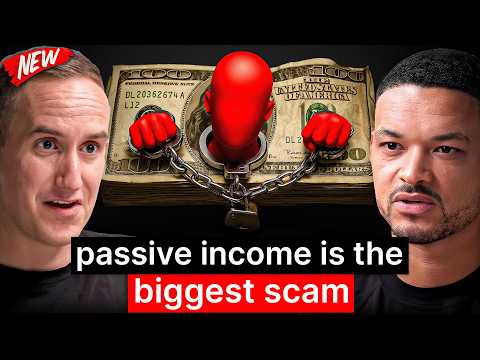
Passive Income Expert: How To Make 10k Per Month In 90 Days!
Ask about The Diary Of A CEO
Episode Description
Serial entrepreneur CHRIS KOERNER reveals how he built 80+ businesses from scratch, turned side hustles into millions, and why ONLY $500 is all you need.
Chris Koerner is a self-made entrepreneur and content creator, known as the “King Of Side Hustles”. With over 1 million followers, he now teaches people how to build and scale a business and he is host of the ‘The Koerner Office Podcast’.
He explains: ◼️The brutal truth about passive income (and what to build instead) ◼️How to turn $1,000 into $10,000 fast, with a step-by-step formula ◼️The #1 habit silently keeping you poor without you realising it ◼️How to use AI tools to launch and scale instantly ◼️The simple framework for testing any business idea with $0
00:00 Who Are You and What Do You Do? 02:36 What Businesses Have You Started? 05:33 Is This the Best Time to Start a Business? 08:52 Copying Businesses 12:53 Experimentation and Testing 20:11 Your Experience With Buc-ee's 23:00 Is Entrepreneurship for Everyone? 30:24 Should We Have Plan Bs? 36:14 Passive Income 39:10 How Important Is Passion? 41:55 How to Know If You Should Pursue an Idea 47:10 How to Validate Your Ideas 48:49 How to Test a Product 52:02 How Important Is It to Learn Facebook Ads? 57:11 Ads 58:51 The Different Types of Entrepreneurs 59:54 How Important Is Focus? 01:02:04 Did You Feel Guilty for Trying to Build Businesses? 01:07:04 Rejection and Failure 01:09:59 Team Building and Business Partners 01:12:30 Equity Split in a Business 01:15:13 What Would You Do With $500 for a Business? 01:20:57 Drop Servicing 01:27:53 Making Money From Vending Machines 01:36:16 Ads 01:38:19 What Business Would You Do With $1,000? 01:41:09 Online Business With $1,000 01:43:38 What Would You Do With $5,000? 01:49:11 Don’t Ignore This When Starting A Business 01:50:09 Which Has Been Your Most Profitable Business? 01:52:13 Keep Trying and Experimenting 01:55:36 Any New Business Ideas You’re Trying? 01:56:34 Business That You Should Stay Away From 02:00:33 Should You Really Become an Entrepreneur? 02:03:43 What’s One Thing Steven Did That You Appreciated? 02:08:17 What’s the Most Popular Question You Get?
Follow Chris: Instagram - https://bit.ly/4oFom0i YouTube - https://bit.ly/3XBUI16 X - https://bit.ly/3Mc0UdJ
The Diary Of A CEO: ◼️Join DOAC circle here - https://doaccircle.com/ ◼️Buy The Diary Of A CEO book here - https://smarturl.it/DOACbook ◼️The 1% Diary is back - limited time only: https://bit.ly/3YFbJbt ◼️The Diary Of A CEO Conversation Cards (Second Edition): https://g2ul0.app.link/f31dsUttKKb ◼️Get email updates - https://bit.ly/diary-of-a-ceo-yt ◼️Follow Steven - https://g2ul0.app.link/gnGqL4IsKKb
Sponsors: Wispr: https://wisprflow.ai/DOAC LinkedIn: https://www.linkedin.com/DIARY Adobe: https://Adobe.Ly/OneBetter Ketone-IQ: https://ketone.com/STEVEN for 30% off your subscription order
Read the full transcriptHide the full transcript
- A lot of people are looking for passive income from side hustles. Yeah, it's the financial ompic and it's more accessible
- than ever. Like 90% of the ideas I talk about can be launched with $500 or less. And there's enough time in the day to do
- these on the nights and weekends. So in these three suitcases in front of me, I have three different amounts of money. And during this conversation, I'm going
- to pass you a box at random. And your job is to tell me what kind of business you would start with that amount of
- money. Sounds good. Let's do this. Known as the king of side hustles, Chris Kerner has launched over 80 businesses,
- earning millions in the process. And now, the serial entrepreneur is going to teach us how to adopt a business mindset
- and launch simple, overlooked, but profitable ventures with little money. Many of us struggle financially and they
- see a side hustle as a solution to that. Like for me, growing up kind of poor, business allowed me to take hold of my
- life and make it what I wanted it to be. And it started when I was 9 years old and wanting a Red Schwin bicycle. My
- friends had a bicycle. My neighbors had a bicycle and my parents didn't have money for it. But I lived across the street from a golf course and these golf
- balls would fly in my yard and I would go to my neighbor's yard and go across the street, dig through the ditches and I'd pull out all these golf balls and I
- started selling them. That was my first business. That taught me that business is approachable and we all have ideas,
- but we usually don't do anything about it. Why? I think number one, they're afraid of what people think. Number two is they don't have the tools or they're
- not connecting the tools with the ideas. If we can get over those, the world is our oyster at that point. I have $1,000.
- What side hustle would you start? The first thing that comes to mind is my favorite business idea of all right now. This is a zero employee business. It's
- highly profitable and that would be so how important is it for you to love the thing to be successful at it? Ignore
- passion. Follow the profit until you can afford to follow your passion. Do they need a business partner? No. If you look
- at the stats on business failure rates with companies that have co-founders, it's significantly higher than companies
- that have solo founders. And how does someone validate a business idea? If I had to pick one tool, it's one that one
- in four humans use every day. That's everything you need right there. I see messages all the time in the comments section that some of you didn't realize you didn't subscribe. So, if you
- could do me a favor and double check if you're a subscriber to this channel, that would be tremendously appreciated. It's the simple, it's the free thing
- that anybody that watches this show frequently can do to help us here to keep everything going in this show in the trajectory it's on. So, please do
- double check if you've subscribed and uh thank you so much because in a strange way you are you're part of our history
- and you're on this journey with us and I appreciate you for that. So, yeah, thank you.
- Chris, who are you and what is the mission that you're on? I am a father. I am a husband and I'm a serial entrepreneur and I love talking
- about business and starting businesses and inspiring other people to do the same.
- Why business has given me everything. Um, growing up kind of poor, it was my outlet. It was my way of just kind of taking hold of my life and making it what I wanted it to be. And I have
- immense gratitude for that. Um, and I love I just love talking about it. I it's the only thing I know you I can't
- talk to you about history or nutrition or anything, but when it comes to business, I just love it and I want other people to love it as well. How
- have you made your name in the world of business? Because I've heard your name a lot recently. People call you the king
- of side hustles. Where has this come from? I think I just published my life on the internet now.
- Um, I I'm always testing and launching and starting businesses, but only over the last couple years have I started publishing that. And I didn't try to be like the king of side
- hustles. That's not something that I've ever like intentionally tried to brand myself as, but I think people see what I
- do as a side hustle and they call it that. But I think that anything is scalable. Any side hustle could could be
- a multi-million dollar business. Um, I mean, we we live on a planet with eight billion people and we're all connected
- and anything can be scaled. And you make a lot of content now, so you've probably had a bit of a feedback
- loop in terms of understanding what it is that you say and do and create that's resonant with people and also why it's
- resonant like what is the crux of what people like my audiences are are looking for. As humans, we all want a silver
- bullet. We want a solution to our problems and many of us struggle financially um and they see a side
- hustle as as an outlet to that or as a solution to that. I think everyone has ideas. um most people are very hesitant
- to execute on those ideas. And so when they see someone like me freely executing on all the ideas, it hopefully
- it opens their mind and helps them look at their ideas in a different way or a more approachable way and maybe gives
- them confidence to do the same. In the boxes in front of me here, I have three different amounts of money. $500, I
- think I have $1,000, and $5,000. And during this conversation, I'm going to pass you a box at random. And your job
- is to tell me what kind of business you would start with that amount of money because I know my audience, you know,
- they're many of them are interested in starting their own business one day. And I use specifically sort of low amounts of money just to make it as accessible
- to them as possible. So, we will do that at some point. I'll pass you the boxes. You give me three business ideas. You'll start with $500, $1,000, and $5,000. Um,
- but I want to get a view on on you and the businesses that you've started and the sort of the variety of success
- you've had. So, can you give me an overview? Yeah. So, I was 9 years old living in
- Utah and I lived across the street from a golf course and these golf balls would fly in my yard and I don't know what
- gave me the idea, but I started selling them. Um, I just wanted money for a bike. I wanted this Schwin bicycle and
- it was red and my friends had a bicycle, my neighbors had a bicycle and my parents didn't have money for it. And so for whatever reason, I connected that
- white golf ball in my grass with money. And I would go to my neighbor's yards, I'd go across the street, I'd dig through the ditches, and I'd pull out all these golf balls. I'd wash them. And then I put up this huge piece of plywood
- in front of my house that said golf balls three for a dollar. And that was my first business. And at the time, it
- was just normal. It was natural. Uh I didn't know any different. And now I have a 9-year-old, and I was nine when I
- did that. And we live on a busy road today. I lived on a busy road then. And the thought of him like negotiating,
- haggling with grown-ups wearing polo shirts on our doorstep is unfathomable. But that's what I was doing. And that planted the seed that kind of taught me that business is approachable. Um,
- preferably it's approachable. Approachable and scalable can be the same thing. They don't have to be at odds with one another. So, and how many
- businesses have you started since then? I lose count. I have a spreadsheet. Um, but it's at least 80.
- And what's the what have the outcomes been? How much money have you made? What kind of how has that changed your life? What freedom has that given you?
- Yeah. So, cumulatively uh all of the businesses have generated low hundreds of millions of revenue. Um low tens of
- millions of profit. Um but on a real number basis, the majority of them have been abandoned or fizzled out or failed or there was
- too much opportunity cost so I pivoted to something else. Um, it's just a numbers game.
- And how has that changed your life? What does your lifestyle look like? My life is awesome. Um, we built our
- dream house in our 20s. Uh, we had all four of our kids in our 20s. We travel a lot. Uh, we're I've been married for 17
- years. We're a very close family. We take a lot of trips. Um, we live in a good school district, but my kids go to public school and, um, we have everything we need and more, and we're
- very grateful for that. What is the overt sort of underpinning mentality that's required for someone to
- be successful at starting businesses in the way that you started them? Starting these side hustles at volume and seeing
- success. Is there like a foundational mentality or personality or character trait required before we get into the
- tactics? Yeah, the I should say that the the pain of your problem needs to be greater than how much you care about what people think about you. It needs to get to that point
- because by far that is the biggest roadblock to success is people caring too much about what people think about
- them. And so they don't want to do the thing or they don't want to talk about doing the thing because some random
- person from high school follows them on Facebook and might comment something, right? Which is really silly, but I I've
- been there. I get it. Right? If we can get over that, if we can just flip the switch in our brain that says people are
- thinking about me, people are caring about me and just switch that to off. Right? Because the world is our oyster
- at that point. And in terms of where we sit at this moment of time with technology, with AI, with in fast
- internet, with mobile phones, do you think this is the best time for people to start something to to start a side
- hustle or to try? Every day that goes by, the timing gets better for people, right? Things are getting more competitive, but there are more tools than ever. Um, 10 years ago, if I wanted
- to start a business, and this is like the internet's in full swing, social media is in full swing, I probably had to spend a lot of money or move to San
- Francisco or raise venture capital. That's like I I would love for you to try to convince me. Try to give me an idea where you have to raise money or where you have to go allin or where you
- you have to quit your job. It doesn't exist. With all these AI tools, software tools, you can make a website with one
- prompt. You can make an app with one prompt. You could post to Facebook Marketplace and have hundreds of inquiries within an hour. You could post
- Facebook ads. You could go to Craigslist. Like, you could put a sign up in front of your house. You could go
- launch a survey to people. Like, there are so many tools for testing and validating and experimenting with these
- concepts that it is more accessible than ever. Why don't people? I think number one is they're afraid of what people think. Number two is they don't have the tools or at least they're
- not connecting the tools with the ideas, right? They'll use Facebook Marketplace to sell a sectional, but then they won't
- think to use it when validating their woodworking idea, right? They're just not connecting the dots. There's too many tools in a sense, so we don't know how to tie them all together. Um,
- they also probably don't know like how much the law of abundance is a real thing, right? People think business is a zero sum game. What does that mean? Well, they think that things are
- oversaturated. They'll have an idea for a product or a service and then they'll get really excited and then they'll go
- Google it and then we'll see it exists and they'll move on. And when I do that and I see it exists, I'm like, "Yes,
- this is it. Someone someone went to the front lines of the battlefield and validated this for me." And then I'll go
- to the web archive. I'll go to who is and I'll go look at what their website has looked like over the last decade.
- See where they started. Maybe their product was $99. Now it's like 49 every 2 months. Interesting. Okay. I'll look at the the copy of their headline. I'll
- look at like how many tabs they have on their website. Do they post their Instagram feed on? I'll look at all
- these things and see how it's evolved over time and think awesome. I'm going to start where he's at today. like this
- guy already proved it out for me. He took all the risk. This is amazing. This exists. I don't need to like do it
- better. I don't need to do it differently. I just need to do the same thing. Um and the market is big enough,
- the world is big enough to where I can win as well. You said um web archive. What role does
- web archive play? What is that for anyone that isn't familiar? And how do you use that? Yeah, it's just a tool that shows
- snapshots uh over time of what a website looks like, right? So, it's a great way of kind of reverse engineering what
- businesses have done to be successful. And then there's another tool called Similar Web where you can see what their
- traffic has been over time. And you can kind of overlay the two and you can say, "Oh, interesting. When they when they
- redesigned their website to be more mobile friendly, their traffic went from 3,000 a month to 4500 a month.
- Interesting. I'm just going to make it mobile friendly from day one." Right? So we are at a great advantage when we
- start where our competitors or our future competitors already are instead of starting where we think we need to be
- starting like trying to be different or innovative or unique. In my experience, that's more of like a signal of our
- pride or our ego. We feel kind of like weird or odd or even dirty or unethical if we're just like copying and pasting a business. Even if we had the original idea ourselves when really there's
- nothing to be ashamed of. We don't want to steal their intellectual property or their logo or anything, but copy what's
- already working. People think, you know, people don't think that that's a thing because they
- think if I copy a business that's already working, then I'm not going to get any customers because that this existing business has all the customers.
- But it's interesting. I had someone on the show where they talked about how some of the greatest entrepreneurs in the world basically just copy 95% of the
- blueprint. I think it was Walmart. I think he was talking about Walmart, but yeah, they copied other like regional grocery chains. Mhm. Copying as a
- strategy. Yeah. Have you done that? Oh, absolutely. Give me an example. Okay. Well, I I had a phone repair business in when I was in college, 2010,
- and I got a call one day from someone that said, "Hey, Chris, I want to buy all of your broken iPhone screens." Do you have any broken iPhone screens? Sure. We don't throw them away cuz we
- think it's bad for the environment. We just have a box of them. How much will you pay me? three bucks a piece. Why?
- Why? Why will you pay me $3? It's just broken glass. And they said, "Well, there's actually a way of remanufacturing these. We can send them
- to China. We can remove the broken glass, put new glass on them, and then we can resell them as a remanufactured
- unit." And that was just like a light bulb, right? So, most people, I think, at this point, would say, "Yeah, like,
- yeah, where do I ship these?" You know, but I was like, "Oh, I need to be in that business. I want to copy that guy
- who called me." right now. I don't know what his website was. I don't know. I don't know what the name of his business
- was. There was no web archive at the time to look at. I just wanted to copy the business model cuz I thought this is
- going to be a thing. I'm in the industry. I know the industry. I'm going to do this as well. We did 2 million the
- first year, then five, and then nine, and then we exited a few years after that. It's interesting, but you know, you
- often don't think that everyone's in search of a new idea. Mhm. And it's tough to find new ideas. Yeah, like I think was it Einstein that said there's no such thing as a new idea?
- Sounds right. But you have an orientation just to look at existing models and to replicate them. Do you put a spin on it at all? I'll develop my own
- spins over time. Right. Because we're all a product of our environment. And so in in the case of this business, I
- started copying. Exactly. Right. Um I went and found people in China. I just went to Alibaba. I messaged a ton of
- people that sold iPhone screens and I said, "Do you recycle? Do you recycle? did you recycle? And like five or 10% of
- them said yes. So then I shipped them samples and then they shipped me some back and and then over time I started
- like taking some marketing principles principles from previous businesses like Facebook ads, cold calling and I started
- applying them just cuz I didn't know how this other competitor was finding success. I knew he was cold calling and
- that was working. That's all I knew. Remember I didn't even know the name of his business. And so over time, you start using your previous experiences to
- apply these tweaks to the business and to make it your own. But if you do that right at the outset, right? Like if I
- got a call and he said, "I want to buy your broken iPhone screens." And I said, "Okay, I'm going to do that, but I don't want to just sell iPhone screens. That's
- lame. I'm going to do Samsung." Right? Pretty good chance there's not even a market for that or there's not even a method for that. And because of my my
- ego, my pride, my unwillingness to just copy what's already working, I wouldn't that I wouldn't have that successful
- business in my back pocket. Right? So, if you do twists in the beginning, it's kind of like your um I'm kind of thinking of an analogy like if you're on a long road trip and you start taking
- detours early on or if a flight is on a flight path and he starts like getting off track just a little bit at the
- beginning, he's going to end off he's going to end up hundreds of miles away from his destination. But if he starts
- making tweaks along the way, then he'll be much closer to where he would have been anyway. Mhm. And you might reach a better
- destination with some of those tweaks because you're blending it with your your experience, what you know
- better than the person that you're copying. And so it's important to to copy the model exactly at the beginning because
- you're also going to learn what it is about that existing model that works. Yeah. And therefore what you can iterate on,
- change, expand. If you if you didn't, then you might miss something. Exactly. Cuz so often I made the mistake of
- looking at another business and saying, "Oh man, why are they doing that? Why are they charging like that? Why? Like
- they're charging all these different things. That's so confusing." I made this mistake. I had a an e-commerce fulfillment business where brands would
- send us all their products. We had this big warehouse and we would ship all all of their stuff out, right? And I was
- like, "Why do they have storage fees, pick pack, and ship fees? They they charge fees for tracking their
- expiration dates. They charge extra fees if there's five items in a box versus four. Like there's so much friction
- there. That's so messy. Like we're going to make this simple. We're going to just one flat fee, no storage fee, and that's
- going to be our differentiator, right? And then over time, over the course of months and years, we learned, oh,
- storage fees. It's because sometimes your customers go out of business and then you're left holding the bill and
- like your storage costs are actually very high but there's nothing to pass on. Oh, pick back and ship fees because
- you learn all these things and you're like, "Okay, I wasn't like this genius that had an MBA. I was just like trying
- to put my own spin on it cuz I thought I was smarter than that business owner." Turns out someone that's been doing this for 15 years versus 15 days knows a lot
- more about the industry than me. And I'm much better off just copying his pricing, copying the layout of his
- website, copying the size of the warehouse he has, copying the same niche that he's going after, cuz that's
- clearly working for him. So, I don't make that mistake anymore. I don't I don't assume that other competitors are
- idiots, right? Yeah. I've been proven wrong too many times. I assume that they're doing that because
- they've learned the hard way. Yeah. And if I copy them, then I won't have to learn the hard way. I had um several of our executives over
- at my house over the last couple of days and we were looking at different models of so basically we're looking at other
- companies that do similar things to us that have been around for a long time. And the question that I ended up asking
- at one moment when I was had the exact same epiphany. I was like why do they do it that way? Isn't that shitty? And there was a second where I think we
- were tempted to try and reinvent the wheel. But the question I ask myself now with the wisdom of like many years of
- business is like why did it end up that way? Which is why did our competitor who's
- been doing this for 50 years end up there? Because that as you said there's clearly
- a set of things that have happened that have made them conclude whether it's at scale or some other factor that's made
- them conclude that this is the best way of doing it. And just like you I've been wrong so many times where I've thought
- they're just idiots. That's why they they they can't see this obvious thing. But actually their model is stress tested in the market much more than mine
- is. So maybe I should I should put my ego aside and at least start how they start as you said which I
- think is really important advice. Yeah. Well, there are times when a company just keeps doing something because it works. Yeah. And so they don't take the time to test
- something that works better, right? But it's almost impossible to guess what that is, right? Like if a if a clothing
- brand is growing their business entirely through Facebook ads um and they've just never tried Google ads, maybe Google ads
- could convert twice as better. Twice twice better, right? But I don't want to guess that. I just want to start with
- Facebook ads and then I'll still take 5% of my budget and start testing other concepts. But nine times out of 10, I
- ended up just coming right back to Facebook ads. It got me thinking about how in business basically everything,
- again speaking broadly here, can be put into one of two categories. either like old problems where thousands of people
- have come before you and the same solutions and same thinking is still relevant and then new problems you know things like AI have created a set of new problems new opportunities as well and
- what I tend to find is that like 95% of the things in business are like old problems like hiring cash flow how
- finance is done legal all those kinds of things and the and when when you're dealing with a new an old problem expertise is
- usually the answer which is like find someone who knows hire someone or mentor or whatever and then you have these new
- problems where there is no blueprint in our industry. It's a new new challenge. So
- experimentation is the answer. Does that like broadly hold in your in your mind? Oh 100%. Yeah. I I like to say test
- everything except drugs. Like we're always testing. Um it's the basis to everything we do.
- But do you test when it's an old problem? Can you give me an example? So like things like cash flow management um hiring principles around like probation
- and uh notice periods um a lot of legal structuring and deals things with like a wellestablished president well established presidents where like nothing has fundamentally changed in the world that makes that invalid. Yeah, I
- think if it's an old problem, I look to an example of someone within the last decade that's solved it in an
- interesting way and I'm more likely to copy that. Like in hiring, traditionally companies will they'll spend hours and
- weeks or days hiring, going from round to round to round, person. And if you look at Y Combinator, arguably the
- greatest, you know, startup incubator in the world, they have seven-minute interviews. Um, and they said they would
- make it five minutes, but it just felt rude, right? and in their interviews, they really know in the first three
- minutes if it's a fit or not, and then the interview's done. Like, they're either in or they're not. I I approach
- hiring the same way. Um, I would much rather um take a like a a law of large numbers approach to it and give five people 30 days to show what their skills
- are as opposed to spending 30 days going all in on one person. Because in my experience, that one person that I spent
- 30 days on is not any more likely to succeed than those those other five people that I might be testing.
- Okay. And your example of that storage company you started. Mhm. It sounds like you hit an old problem. Yes, very much so. And you tried to innovate and experiment, but this was an old problem
- where the laws of human beings and how they behave and businesses going bust was still pertinent. Yeah. And at the end of our our 2-year
- experiment, like we look just like all of our competitors, right? So, if we would have started there, we could have
- saved two years. And this is what I find is founders waste years trying to experiment where
- old problems are still um strong and still hold. Yeah. And this is what I the mistake several
- of the mistakes I made in my company was I should have spent all of my time experimenting on the new problems. Uhhuh. and should have hired people to
- tell me um how to navigate the old problems. Yeah. What what was your um I think one of the
- videos that made you go pretty viral was your story of BIES. We don't know what BIES is around
- the world. I think it's a US brand. Yeah. But this shows I think how you've always had an orientation to think slightly
- differently or in innovatively. Yeah. What happened with BIES? So this was during the time when I was
- running that business shipping products for other companies. Right. Bies is a gas station brand uh with only 50
- locations. And from those 50 locations, they do billions of dollars of revenue. I say gas station, they're between
- 40,000 and 80,000 square feet. Wow. They're massive. They have an amazing brand, an amazing logo, and they just
- have a lot of trust from their customers. But these gas stations are like they're on the way out to these road trip destinations. They're out in
- the middle of nowhere. And so if you're if you live in Dallas and you're driving down to the beach, you're going to stop by Bies on the way there and on the way
- back, and you're probably going to spend hundreds of dollars, right? You're going to fill up the tank, then you're going to buy shirts and snacks and all that
- stuff. So, at the time we were running this e-commerce fulfillment business, we went to Buckies. I brought my cousin, my
- business partner, um, just to kind of show him the experience. And we were just having a conversation. I remember
- exactly where I was. I was like under this underpass, this huge under pass in DFW. We were driving home and I said,
- "Man, these guys must kill it online. They must sell so much stuff." Um, why? Because I knew that Disney sells like billions of dollars of t-shirts on their website, right? I read a stat recently.
- So, I kind of just took that data point, connected it to Bies, and said, "All right, Bies is a fraction of the size of Disney, but they have the same amount of
- brand loyalty. People love their shirts. You'll see their shirts all over the world, even though they only have 50
- locations like in the Southeast, right?" And so we went to their website and there was no shop button. There was no
- place to buy their stuff and I was just like like all the light bulbs were going
- off at once, right? It was like, "Oh my gosh, okay, we need to reach out to them. Like we need to bring them
- online." I just had all these ideas and my cousin is is much more balanced than I am. He's like the the operator and I'm
- like the ADHD crazy guy, right? So his role is to like calm me down and he's very good at that. But I just couldn't
- be calmed down from this. I'm like, "No, no, no. We got to do something here. We're going to buy one of everything.
- We're going to hire a photographer to take pictures of it. We're going to launch our own BIES online store, and
- we're going to try to go viral." Like, it's viral or bust, right? If we don't go viral, then I'll just be eating these
- unhealthy snacks for the next 3 years of my life. And so, we did. We bought one of everything. Uh, it cost thousands of
- dollars. I brought all four of my kids. And, uh, we brought it back to our warehouse. We took pictures of it. We
- launched a website. Um, and I emailed all the reporters I could find. Uh, and one of them just loved the idea. He ran with it. And so he reached out to BIES for comment cuz they wouldn't respond to
- my cold emails. I wanted to launch this like with them in tandem, but who am I? They didn't care about me. And I don't blame them. And so he wrote this big
- article about me. Millions of people read it. All these other news outlets uh wrote about it. And we did hundreds of
- thousands of of dollars in our first 30 days organically from that. How did Bies feel about that?
- They wanted us to make some key changes to the website. They wanted us to like basically put disclaimers everywhere
- that said we are not Bies. We're not affiliated with Bies. They wanted us to change the name. It had the word beaver
- in the name. That's their mascot. They just they didn't want it to be confusing at all. So, we made all those changes
- and then we got like the unofficial thumbs up from them. They said, "We're not going to sign anything, but like you
- have our blessing. Um, have fun." And did that website make you a lot of money? Yeah, it still is. It's been 5 years. We
- still own it, 100% of it, and it's going great. And it's made you millions. Uh-huh.
- What can someone listening take from that in terms of applying that to their own life, finding opportunities like that out in the world, or is that just a oneandone? Is there only one opportunity like that? Okay. So, specific, I get
- asked that question a lot. How could someone do that with another brand? I don't know. If if there was another
- brand out there like that, I would be doing it, right? Trader Joe's is similar, but they're very ligious. Um I
- think that was kind of lightning in a bottle for that particular experiment as in launching an online brand for an
- in-person business. Okay. But people should not be disheartened hearing that because on a macro level like people
- should take their curious ideas very seriously. They need to shorten the amount of time spent between having the idea and doing something about that idea
- because that will strengthen their bias for action muscle, right? We all have ideas, some of them good, some of them bad on a regular basis. We usually don't do anything about it. It's just a
- passing thought, right? Whether it's a business idea or a hard conversation I need to have with something, any idea,
- right? But the the the more we shrink the amount of time between doing something about that idea and having the idea that that idea, the more often we'll do that. And it becomes this
- self-perpetuating snowball that just compounds. And then before we know it, we'll get more ideas. We'll do more
- about those ideas. We'll be testing things. We'll be learning tools. We'll be experimenting. And we'll have a whole
- portfolio of businesses. Is there something in your mentality or perspective though where you walk into a
- Buckies and you even think about how you could do something whereas most people walk into a Bies and buy their stuff and leave? Like is there something
- foundational in the way that you're looking at the world? Yeah. But I don't think I'm any different. I think um I
- think a lot of people have ideas like that. Like you walk into a BIES and you see something about something that could
- be improved and people have these passing thoughts and they move on. I think that you become an expert at doing
- something about those ideas. When you do something about those ideas, you just you get better at at what you do, at what you test,
- cuz you've built up some kind of muscle, which means that you don't really care about it seems failure as much as the
- average person. And also in that particular case, the average person might think, well, I've got no experience in doing that.
- Mhm. No, no one has any experience in anything until they do it, right? Like every every expert started out as a
- beginner, right? Sometimes though, people try this and they learn h doesn't give them energy. It's not for them. That's okay. Now,
- when they have ideas, they can know, all right, box checked. That's not really for me. That entrepreneurship thinks
- someone else needs to do that. And great, good. All the power to them. I just want people to answer that question
- for themselves. I hate seeing regret in people's faces. Like I have friends that
- want to start a business. They've always talked about it and I know they would be good at it and I know it just eats them up and they have really really good
- ideas objectively and I I just hate seeing them have that question for the rest of their lives. I just want them to to taste entrepreneurship. Is it for everybody though? You know,
- you can think think of all your friends. Yeah. You can probably put them in groups of this person should, this person
- shouldn't. Mhm. And what defines who goes in which group? To me, it's how far they go in doing
- something about that idea because I will have friends that will text me ideas or
- talk to me about ideas and then I never hear from them again about that thing. I don't worry about them. Right? I I feel
- like there's a selection bias at play. Like if they really wanted to do something about it, they would get a little further down the line. They'd
- follow up with me. that's, hey, I did this thing. Cuz I'll always give them tips and feedback. You should do this. You should try this. And they'll follow
- up. And then, you know, at some point along the line, it'll die, right? But if they don't get any further than just telling me their idea, then I don't I don't lose sleep over them.
- So, it's kind of surviv. It's kind of sort of self- selecting itself anyway. It is entrepreneurship.
- Yeah. Absolutely. But then I have other friends that are like they'll follow up, they'll follow up, they'll follow up, and then and then it dies, which is
- okay. A lot of my ideas die, too. And to me, that's a signal that it was supposed to die, right? I'll just move on to the
- next thing. Um, so it's those people that maybe I'm just biased and they look more like me, you know? Um, maybe that's
- not an accurate signal or not, but if they look more like me, then that's a signal that they they should get further
- down the line and actually launch something that gets to revenue. Yeah. In your head, think of one person you know that should never start a business.
- Okay. Why did you think of that person without telling me who they are? because they
- make a lot of money at their job and they like their job well enough. They're not miserable. Um, and they're in their late 40s and they probably feel like it
- would be too big of a risk to start something. And do you objectively agree that it would be too big of a risk for them? I do.
- So, you're looking at that on a risk-reward basis thinking the reward doesn't out outweigh the risk here for you?
- Yeah. Yeah. Cuz people come to me like hoping that I'll encourage them to quit their job, right? Like begging me to do
- that without actually begging me. And I don't want to do that. Like I I've never had to quit a job. Like I I started with
- entrepreneurship, right? So the thought of being 48 with four kids and quitting my $400,000 a year job to test something. It just sounds crazy to me.
- On the other hand, think of one person you know that isn't an entrepreneur, but definitely should be, but you always
- think, "Why don't they do it?" Yeah. Why did you think of that person? Because it's a person that comes to me
- the most often with ideas and they're really, really good ideas. He's an engineer. Um, and so he sees the world
- in that way. Engineers make great entrepreneurs. Um, and he has a great work ethic and he's
- like mid-career but not not so far along. And I know objectively that he's not he's actually quite miserable in his job. And I hate that for him because I
- see the talent that's there. And I want him like I think he would excel and I want to see that dream come true for
- him. Why isn't he doing it? I think it it's insecurity. Fear. Yeah. fear of probably fear of just letting go of something certain that's provided his family a nice lifestyle and not getting
- that back again ever. Um I think that insecurities are at the root of our best and our worst selves and it can drive us to be our best or worst selves um depending on how
- self-aware we are about those insecurities. Is there a little bit of a flaw in his
- thinking in your perspective? Like why is it you you still even though what he's saying there about you know what
- you think he believes there about the security for his family is true you still think he should
- which suggests that there's some kind of flaw you see in the way he's thinking about it. Yeah.
- Because he doesn't have to quit his job. um there's enough time in the day to do
- this on the nights and weekends to to do enough of it to really prove itself out.
- Often times like whatever our side hustle is, uh it has a very low ceiling if we're only working on it um after hours, right? Let's say
- we're spending 20 hours a week on a side hustle and it makes us $50,000 a year, but our job pays us $200,000 a year and
- we spend 40 hours a week on that. One thing that I've noticed, which is kind of contradictory to how I feel about
- quitting something, um, is when we go from 20 hours a week on our the $50,000 a year side hustle to 40 hours a week and we quit the full-time thing, that $50,000 a year goes to 500,000, right?
- We double the amount of hours, but we 10 times the amount of money that comes from it because of the fact that we burn
- the boats that it has to work. I just I don't want people to burn the boats too soon, right? Like there has to be a
- pathway. Like let's say our Facebook ads are converting really well. We've tested scaling it and they're profitable and we
- know what that would look like. But if we scale it, then we're going to have more customer service complaints. We're going to have to do more architecture of
- the website. But we like we see a path to scaling and it's already profitable and we know that like probably my boss
- will take me back like we have kind of these uh safety nets. That's like the perfect time to really burn the boats. Not when like we have an idea or we've tested it a little bit but not thoroughly. Um that's too soon in my
- opinion. And but by burn the boats you mean the analogy of I guess some of the the wartime leaders who would pull up on an
- island that they were invading and burn the boat so that they had no plan B. Mhm. Exactly. Yeah. to quit.
- Do you think that really matters? The whole idea of a plan B. Do you think people should have a plan B when they embark on entrepreneurship?
- Can I contradict myself 100%. All right. So, the rational Chris, the Chris with four kids says absolutely like you got to be a dad, you got to be a husband, you got to provide for your family,
- right? Um, and again, there's so many tools out there for testing, for scaling, for outsourcing. We could find
- a business partner to help pick up the slack. We could use our kids, we could use our spouse, whatever. There's so many ways to really vet something out
- before quitting that we don't have to quit. But the other side of my mouth, there's been
- um two times in my entrepreneurial career when someone burned the boats for me, right? I pull up to an island and it's I've got my plan B. I'm testing this business. This business is
- profitable. It's paying the bills. And then someone else in the middle of the night, they snuck out. They burn my
- boats and I wake up and I'm like, whoa, where's my plan B? I wasn't ready to burn those boats yet. Um, and plan A
- just freaking thrives, right? And it's not so much because of the fact that I don't have a safety net anymore, but it's because that event put a chip on my shoulder that makes me want to to prove
- those bad guys wrong. Right. To oversimplify, those guys that burn my boat. Toxic motivation.
- Exactly. That's a that's a good way to put it to show them I didn't need those boats. I'm not going back, right? This
- island is better than where I came from. I remember reading about a study on Plan B's where they got a group of students,
- two groups, and then they told them to do a puzzle to win a treat. And then in one of the groups, they told them that
- they could get this treat at a vending machine down the hallway if they if they wanted it after. And the group that
- didn't understand they could get the same reward from a plan B worked significantly harder to complete
- that puzzle. So there's something in the human psyche of know when you know that you could
- get the reward in another way. When you have a plan B, we work less hard at the plan A.
- Logically, maybe we should, you know, practical and unresponsible remove the plan B from our mind. Yeah. Yeah. Yeah, I just like I I can't think
- of any stories from people in my sphere of influence that have tested something,
- quit the plan A, and then plan B just failed and like they just lost everything. Like surely that's happened,
- right? That does happen when people like prematurely quit, but in my experience,
- it just it doesn't happen. Like it it has the opposite effect. It becomes this huge motivating factor. And when they
- quit, I ask them like, "How do you feel? Are you freaking out?" And it's always always, "I'm so excited right now. Like, I'm going to go all in on this. Like, this has to work." And it does. It just
- does. A lot of people are looking for passive income from side hustles. And I wondered
- what your your op opinion was on passive income because it's a word that comes up so often in the comment section of this
- channel, but when we're doing sort of sentiment analysis and what people are what they're interested in. Passive income seems to be a bit of a buzz word.
- Yeah, it's the silver bullet, right? It's like it's the uh it's the financial oic you could say. What is passive income? How would how would one define that? I would define it as income that you receive um that you
- don't have to continually put effort towards like uh buying treasuries, earning 4% on on your money and you
- don't do anything and you just get paid. And it's it's very hard to find especially early on. Like we have to be
- willing to create active income, sweaty income, ugly income, like by whatever means necessary. And the more we do that, the longer we do that, the more um
- realistic true passive income actually is. Sweaty, ugly income. Yeah. Give me an example of some sweaty, ugly income that anyone listening right now could could create. What are your
- favorite examples of non-obvious businesses that people have started that have resulted in passive, sweaty, ugly income?
- Yeah, I mean, most things that I've started have been just that. I had a uh a concierge car buying business. Um a concierge car buying business. Yeah. What's that? So, picture a traditional car
- dealership, a used car dealership. You got to get your dealer's permit. That uh enables you legally to go to the
- auctions and buy cars at wholesale, put them on your lot, and sell them. So, I did all the regulatory stuff. I got my
- my dealer's permit, but then I would go to individuals and they would say, "I want a 2024 Seoia. I want it to be blue,
- under 30,000 mi." and I would just go to the auction and buy it for them for like $700 fee. So, they get wholesale, they
- save money, I make money, I don't have to bear the inventory risk and I can buy exactly what they want. Um, that sounds
- great, right? On paper. People do that business successfully. I didn't invent it. I copied it, right? I hated it. Uh,
- I was breaking down on the side of the road driving these things back from the auction. I'm not a car guy. I don't care about cars. I don't work on cars. It's
- not my passion. That was ugly. It was hot in Texas. I was standing out on the black top. I was making money. It was
- profitable. And I got to the point where I just like quit it. I just shut it down. Moved on to something else. Um
- that was very active. It was not scalable on the surface. It was ugly. I hated it. And so I pivoted because I had
- a plan B. I didn't have to do that, right? Um that's one example. Uh if someone likes cars, it's it's a actually
- a great business. Like I know a gentleman in Alabama that makes a lot of money doing that, right? For me it was
- it was not great. So how important then is passion in this equation? Like how important it is for for you to love the thing to be
- successful at it in your view? I think you need to fall in love with business with commerce and if you can love
- entrepreneurship turning $1 into two and that like if you could focus on that being your passion then anything that
- falls underneath that you should win at, right? But I I like to say follow the profit. pro fit T. Um, until you can afford to follow your passion,
- right? Because if we're trying to follow our passion from day one, we're probably not ever going to get there because the
- statistical likelihood that what we love and what makes us money overlaps in the
- beginning is almost zero. So, ignore passion for a time. Try to build your passion around commerce. Um, and then start anything. And then once you're
- able to have more passive income, then start things that you're passionate about like in the in the actual industry
- that you're passionate about. Persistence. Persistence is obviously going to create
- repetitions to like understand the problem to learn more to, you know, so I wonder as it relates to passion and
- persistence, they seem sort of inextricably linked. Something I'm more passionate about, I'm more likely to continue at even when the
- rewards don't show up. Yeah, like my car my car business, right? I had no passion for cars and I had another business that
- was doing great. So, so I abandoned that. Um, but people think that like people sometimes look at themselves as lazy or they're not a hard worker. And so they're just they're not confident
- that they could do this. But there's like everyone is a hard worker. Everyone on this planet has the same DNA that enables them to work hard. But the problem is what they're working on
- probably gives them no energy, right? They're probably not passionate about it. So, what am I passionate about?
- Well, we got to we got to test everything. We have to try new things. We have to take that curious question and turn it into a business. Maybe
- that's fun. Maybe it's not. Right? We need more surface area for finding what our passions actually are. Cuz we might
- think that like like I love woodworking, right? I don't have to build a business around that cuz I love business, right?
- So, I can build a business around anything. But if I got super hung up on like I cannot make a profit from this woodworking business um then I would
- fail at entrepreneurship if I started there, right? Whereas if I approached this from um the angle of all right, I
- like woodworking. What else do I like? Maybe I like running, maybe I like cooking, maybe I like short form videos,
- and I just start trying all those new things. Then eventually I'm going to have enough surface area for testing
- that I'm going to find things where um you've heard of the eeky guy principle. Mhm. Right. So what you love, what you're
- good at, what the world needs, and what you can charge for, right? The overlap of that is the sweet spot. That's what's scalable. That's what you can do until you die. But if you get super hung up on
- that on day one, like I'm just not passionate about that, like you're never going to find it. Like you're going to be in that job forever. My career
- follows the same same arc which is I tried tons of things and then I built this marketing business and then that
- became more of a product business and grew and I didn't love it. Like it wasn't my passion to do um to help like
- Coca-Cola sell more cans of Coke or like you know Uber sell more Ubers necessarily. That wasn't like my passion
- in life. However, it taught me a bunch of skills which then in when I quit that business
- and I spent some time in psychedelics, DJing, building software, web 3, you name it. Um I came out on the other side
- and could ask myself that guy question which is of all the things that I have tried what is the thing that I would do like really irrespective of money. Now I
- had that luxury to do that and actually in 2020 the answer was this. Mhm. Like this was the answer. This answer
- was I I literally moved to London from New York and found a place without viewing it properly that looked like
- this because I thought this would be a good podcast set and moved into that place called Jack and then we started
- about five five years ago um doing doing this weekly and it's become a business off the back
- of it. But I didn't have that luxury at the start. If I tried that from day one, I wouldn't have had a the skills to know
- how to scale an audience. Mhm. I wouldn't have had the flexibility to buy all these cameras which cost like 50
- grand or whatever at the start. Um so and I do think some people sometimes get that inverted. Yeah. And you you're not distracted
- anymore, right? You're not looking for the next DJ thing or like you found it. You're here right now. You're focused on
- scaling. It's like people get so hung up on focus or lack thereof and they just beat themselves up over it. But in my
- experience, like a lack of focus is a signal that there's something else out there, right? right? Then maybe we
- shouldn't be focusing on that thing cuz you've probably worked on things that had perfect product market fit and were
- just crushing and you weren't thinking about starting a DJing business at that point, right? You were all in on this one
- thing. But in the times when you were working on something, you're like, "Maybe I'll try this. Maybe I'll try this." And you beat yourself up. You're like, "Oh, and
- focus, focus, focus." Like, "Let's actually pay attention to those signals. Why am I distracted from this thing?" So
- that's I don't know if that's just me coping with my own ADHD or if that's actually a true principle, but I I try
- to lend some credence to those signals of distraction that I get on a regular basis. Yeah, I have a a Sunday shelf,
- which is just a digital board on my Monday board where when I have ideas that like captivate me at 11:00 p.m. at night one night, instead of trying to act on them immediately, cuz I think I'm
- in some respects like you, I put it on the Sunday shelf. Mhm. And um I wait and see.
- Yeah. I wait and see how much it pulls at me to come off the shelf. And then sometimes it comes off the
- shelf. I get a little bit of the way down. I discover that actually there's something I didn't realize. And then I quit. But then there's this, you know, when you think about the like the
- excitement arc of a new idea. You have the like initial surge of excitement like this is the best thing ever. I'm
- going to become a billionaire. Why has no one ever thought of this before? And then you kind of get into it and you get into that sort of valley of oh this
- is a terrible idea. I'm an idiot. Yep. If I can come out of that valley, if if something pulls me up out of that
- valley, then I think it's worth pursuing. Yeah, that's a good way of looking at it. The the valley of despair or something that's what they call it.
- Yeah. Yeah. Do you follow a similar sort of path with idea your ideas? It's funny cuz I
- my kind of framework is if I have an idea, am I thinking about it still two weeks later? For whatever reason, that's just my timeline. Two weeks. I had an idea yesterday and I was
- at the airport. I was excited about it and I was doing research. I like forgot about it, right? Who cares, you know?
- But I have ideas where I just cannot get it out of my head and I'll see something out there in the world that adds to the idea and I tell my friend about it and I
- I send these manic voicemails or these manic voice notes to my friends about it and I'm still thinking about it 2 weeks
- later. That's my signal that there's actually something here. Um, you used the word validating earlier on
- when you're talking about these ideas and I I think this is something that could really really help a lot of people
- who have a lot of ideas is this idea of trying to validate your ideas as fast as possible. Mhm. How might one validate an idea and can
- you give me an example of an idea that you have validated? What does validation mean? Mhm. Yeah. So, I like to see people get
- joy from my product or service, right? Not just like, well, it's good. Like let's say I'm selling a food product. It
- tastes good. It's good. Okay, people might buy this, but I'm not going to have product market fit. I'm going to be pushing a boulder up the hill, right? But if people are like, "Oh my gosh,
- this is the best thing I've ever had. Where did you make this? How did you make this?" It lights up in their face.
- That's an example of a validation in my case, right? Same industry, food product, completely different reactions, right? So, one specific example is um my
- wife has a cookie bar business, right? Square cookies, and they're amazing. And we're not trying to scale it. We don't want to scale it. It's a way to teach our kids entrepreneurship, and we love it. But the best way to validate this
- was going to our local farmers market and just posting up and just giving people samples and just watching them, right? What do they say versus how do they react? And is it the same?
- What do you mean by that? Well, sometimes we try to use the internet in places where it's it's not needful, right? She sold these online,
- right? She shipped them to friends and family across the country. Like, they're great. We love them. Okay. I didn't see you eat it. I don't know how you
- actually love it. Are you saying that because you're my mom, right? Or you're my friend. But when you solicit feedback
- on your product or service in person, even if it's like an internet tool or an app, in person makes all the difference.
- You want to take note of what they say and take note of their body language and how they react when they experience your
- product or service, right? And if all three of those things overlap, then either they're a psychopath and they're
- just lying for no good reason or you have something really special on your hands. Uh, and so that's what we did
- with her cookie bar business. And um, and they loved it. And you can do that with any business. It doesn't have to be food.
- And what does validation mean? is it's checking if the market gives a about the thing you're making as fast as
- you can. Yeah. Yeah. Um I like to kind of picture a you know a boulder up a hill, right? And most people in their businesses, even businesses that are working, there are two steps forward,
- one step back. Two steps forward, one step back. And that's okay. Like that's not a bad thing. But in my experience,
- 5% of the time I'll have a business where the boulder is chasing me. Like I'm trying to not die because this
- boulder's chasing me down a hill. And that boulder in this case represents customers demand, right? Like I can't
- sleep because I'm fulfilling orders. I'm answering emails like I'm not getting distracted by the next shiny object.
- That is validation. That's product market fit in my experience. You don't have to have that to launch. I don't
- want people to misunderstand. Um but if you have that, like you have something very special and you need to go all in
- on that thing. There was a book published uh several years ago called the lean startup which talks about this
- idea of just like testing an MVP as quick quick quickly as you possibly can. Can you explain that to the audience who
- probably have ideas but in their head are thinking I've got to quit my job. I'm going to have to raise money. I'm going to have to spend two to three
- years building something to figure out if this is a good idea or not. What is the alternative approach that you adopt when you're trying to stress test an
- idea quickly? Yeah. So, if I had to pick one tool, I mean, it's one that one in four humans
- use every day, and it's Facebook, right? You've got Facebook groups, you got WhatsApp, um, Instagram, Facebook Marketplace, Facebook pages, uh,
- Facebook ads, right? Let's just say there's six different meta products, Facebook products. That's everything you
- need right there, right? Why why don't you give me an example of just a random business and I'll I'll tell you or the
- the audience how they could validate that with a Facebook product. Okay. Um I'm thinking of starting a
- creatine brand for women that has makes creatine taste good. Okay. All right. Are we talking powder gummy? What form
- factor? I don't know. Okay. Well, let's let's try both. Okay. So, I'm going to do something that seems
- very non-obvious and probably won't work, but it's the lowest amount of friction. I'm going to take a description for that and I'm going to
- use Nano Banana, Chad GBT, any of the AI image generators to come up with what the product could look like, right? In
- both a gummy form and a powder form. Okay. Then I'm going to go to Facebook Marketplace. You You're just going to
- post a photo. Yeah. I'm just going to say like women's creatine brand actually tastes good. tastes good, right? Like, did you know
- that creatine and improves cognitive function or whatever? Just your standard pitch. I could even use AI to generate
- it. It doesn't really matter at this point and I'm gonna post it to Facebook marketplace simply because that's the
- lowest amount of friction to get some level of validation or not, right? Because in my experience, focus is
- overrated and momentum is underrated, right? And so you could have told me any idea and my first step that I tell you to do is going to be something very very low friction because I want you to get
- something back from the world, right? Cuz the most likely way to sell that product is with meta ads, right? But
- there's a lot of friction there. Like it's it's hard to use. So you're going to be like, "Okay, you're going to go choose met ads and you're going to burn
- out and you're going to have be on to something else by tomorrow." But that might be an amazing idea, right? So, I'm going to tell you to go to Facebook
- Marketplace, even though people don't sell creatine on Facebook Marketplace. And then we're going to see, you know,
- Facebook gives us like three stats when you post something to Facebook Marketplace clicks and then how many
- people that reach out and then how many views. Okay, so I'm going to post one Facebook Marketplace ad for the gummies.
- Different picture. It'll look like gummies. Um, basically same headline, same benefit, same description. post to
- Facebook in the same local market with the same radius. Don't want to change any variables. And then I'm going to
- open a Google sheet and I'm going to say how many views, how many clicks, how many messages for that ad. Then I'm
- going to do the same thing. Take the same features, the same benefits, different picture cuz this one's powder. Post it in the same market with the same
- radius to Facebook Marketplace and have a new column um views, reachouts, and um
- clicks, right? And then I'm going to watch and I'm going to see what's getting more clicks and I'm going to
- know within two hours where there's more demand. Now, does that little sample size indicate like what form factor I
- should go all in on? Not necessarily, but it's something. It's a relevant data point, right? There's not very likely to
- be a large amount of people searching for creatine gummies on Facebook Marketplace, but it doesn't matter because there's two billion people using
- it, right? So, we're just trying to capture some of that traffic. So, I'm going to do that with two ads. And then
- after a day or two, I'm going to boost those two ads, put $10 behind each of them to see how my results differ. Does
- it make any difference? Do I get a lot more clicks, a lot more views, or is it just wasted? And then I'm going to um
- I'm going to probably post like 10 more ads of like different photos, different headings, different descriptions,
- different price points, and then put all those in a Google sheet and track it. All right. Now, I have a lot of data.
- Now, concurrently, so while I'm doing all these things, I'm going to go to Facebook groups and I'm going to join
- Facebook groups like moms who work out, moms who love creatine, moms who love rucking, ultrarunner moms, like healthy
- moms, whatever. I'm going to join all these groups and just start doing searches for creatine, gummies, powders,
- price points, vendors, websites, and just start like pulling pieces of data out of out of the atmosphere, right? and I'm gonna put that in my spreadsheet and I want to wait till the Facebook marketplace tests are done. I want to do
- that at the same time. Then I'm going to start learning Facebook ads because everything I've told you to do so far
- takes like 2 hours. Let's say we have an afternoon to dedicate to this, right? Then I'm going to learn Facebook ads and
- I'm going to watch a YouTube video about, you know, how to get Facebook ads up in 10 minutes. How important is it to
- understand Facebook ads and how long would it take me to get a sufficient understanding of Facebook ads? you could
- be proficient in a couple days if if you had like one thing to sell and you just
- wanted to go all in on that thing. Um, and you actually learned by launching ads and not just learning, not just
- endlessly watching YouTube videos, you could be fairly proficient uh within a couple days easily. Do you think that's
- the skill everybody should have? Absolutely. I mean, Facebook ads are like the infinite money glitch. It's
- just like a a magic money machine. It's the reason they're a trillion dollar company. Um, it's like a cheat code.
- Yeah. It's a We should know Facebook ads like we know how to write emails. Like we should know Facebook ads like we know
- how to build websites or to do anything. It should be foundational. H I wonder how many people actually have that skill. Very few. That's why there
- are so many ad agencies charging a lot of money. And then so you've got the data back
- into your spreadsheet on this creatine situation. How do you then make a decision whether this is something worth
- pursuing? Yeah. Then I would go find like a a c-acker that could it's a company that will take my idea and put it into a physical form, right?
- Um I'd find like a supplement company that could actually make this and I would tell it roughly like what I'm
- thinking and then ask for samples and then I would use those samples to go get feedback from people in person, right?
- But I wouldn't get those samples until I got feedback from all these Facebook tests telling me what form factor, what price point, what color, what flavor,
- um, etc. And then I would go to a farmers market and actually have people try it. I've had so many founders speak
- to me and say, "Why didn't this particular ad that I ran on this platform work for me?" Maybe the copy
- wasn't good, the creative wasn't strong, but usually the problem is they're not having the right conversation because that ad never reached the right person.
- And if you're in B2B marketing, that is much of the game. And this is where LinkedIn ads solves that problem for
- you. Their targeting is ridiculously specific. You can target by job title, seniority, company size, industry, and
- even someone's skill set. And their network includes over a billion professionals, about 130 million of them
- are decision makers. So when you use LinkedIn ads, you're putting your brand in front of the right people. And
- LinkedIn ads also drive the highest B2B return on ad spend across all ad networks in my experience. If you want
- to give them a try, head over to linkedin.com/diary. And when you spend $250 on your first
- LinkedIn ads campaign, you'll get an extra $250 credit from me for the next one. That's linkedin.com/diary. Terms and conditions apply.
- I've heard you say that there's various types of entrepreneurs. There's the sort of zero to one entrepreneur who's good
- at starting things. There's the maintainer. And then there's the finisher. Which one are you? I'm a starter. Yeah. Through and
- through. I if I stay in a business too long, it all falls apart, right? Just objectively. So, I need to hand off the reigns at a
- very specific point or I need to have a partner from the outset that knows me, my strengths and my weaknesses um that just takes over at a certain point. So, I like to say there are starters,
- maintainers, and finishers. A starter could be called like a visionary and not as like a backhanded compliment way, but
- someone an idea guy, right? Not just a business idea guy, but like a marketing idea guy. Uh, let's change the subject
- line to this idea guy. Like a an idea machine, right? That's a visionary. And then you have the maintainer, which would be an operator. That's a guy that just wakes up every day and loves
- tweaking little things, making small improvements. uh process oriented, someone that loves growing something and
- just fixing little problems all day, right? And then you have a finisher, which is like a deal guy, right? That's
- the guy that's a super connector. Uh he likes to, oh, you need to talk to Barry. And then he calls him, he connects them,
- and like he just gets a lot of energy from connecting deals, coming up with creative deals for an exit, for a sale,
- putting people together, hiring the right people, um seeing something to its completion. Um, but I'm definitely in
- the first camp. Is it possible to be all three? Yeah. When you're all three, you're Mark Zuckerberg. I mean, truly, like you
- start something from scratch and you see it to a trillion dollars. Um, there's been like I think there have been three
- people on the planet that have brought something from zero to a trillion. Jensen Wang, Nvidia, um, Elon Musk, and
- Mark Zuckerberg. I think like even Bill Gates, even Steve Jobs, I might be wrong. Yeah. But even Steve Jobs got out
- long before they hit a trillion market cap. But a billion, a lot of people get zero to a billion.
- That's not nothing. Also very impressive. But when you get all three, that's what you get.
- One of the things that I find really interesting about your story is you you've started what is it 75 80 businesses.
- Mhm. When I speak to people like Kevin Olirri who have worked with some of the greatest entrepreneurs to ever live like Steve Jobs and he's very familiar with Elon Musk, they talk to me about focus.
- Mhm. And he says to me that the great thing about Steve Jobs is he was 80% signal
- and 20% noise. I.e. 80% of his time he was focused on the most important thing and he was brutal about not entertaining anything else. M Johnny Ives has famously said that the
- one thing Steve Jobs was most known for is his remarkable ability to focus. He would literally ask you what have you
- said no to in order to focus on the most important thing. Uh I think about Mark Zuckerberg and his
- unbelievable ability to focus. I remember uh several people at Meta but also I think it's a public story telling
- me that when he realized he was late to mobile he refused to take any meetings about anything other than mobile like
- extreme levels of focus. And then Kevin Olirri from Shark Tank said the same to me about Elon Musk. He says Elon Musk is the only person that I
- think operates close to 100% signal which is he and I interviewed Walter Isaac and his biographer and he said
- Elon will sit in a meeting and if people aren't talking about something that is the most important thing he'll
- completely zone out and then the minute he hears something that he considers to be the most important thing it's like he snaps into reality and he takes control
- and he's deep into the detail and I it sits in contradiction to a lot of the the narrative of like lots of side
- hustles, lots of businesses, do as many things as you can. How do you but you've both kind of you know you've managed to
- create a life for yourself where you're you're a millionaire and you're free in that regard but when I look at the biggest companies
- in the world there's this like there appears to be obsessive focus. Yeah. I love that question. I I think that all else equal the guy who focuses more is
- more likely to be a billionaire. But back to momentum, right? The person that keeps and has and mo maintains momentum and has gets energy from what they do, they're more likely to be a millionaire
- by the average than the average person, right? I I genuinely have no desire to be a billionaire. Genuinely, if I get
- there, cool. But I don't want to leave my kids tens of millions of dollars anyway. I know where I get most of my
- energy from. I have a lot of surface area for this. I've tried the focus. I've tried having a board. I don't want
- any of that. Genuinely, I don't. Right. So, if my life with hyperfocused Chris looks like billion-dollar exits, uh, reporting to a board, uh, being chairman
- of the board, being CEO, um, sitting in meetings all day, that's miserable Chris, right? And if I'm not going to,
- if I don't want to leave a ton of money to my kids anyway, then why am I making Chris miserable so my fourth great
- grandkids can be rich instead of just my second great grandkids? Like that's that's genuinely how I look at it. I'm
- one of my superpowers is my my long-term perspective, right? I think of things on an eternal scale. And if I have to have
- a miserable life so my kids in year 2300 can still be wealthy, forget that. Like
- I don't I don't I don't want them to have all that money anyway, you know? So I want to live an awesome life where I'm
- a good and present father. And to me that looks like focusing less, not more. What if you focused for the next 10 years? You made it to a billion dollars on one thing
- and then because you've done that you can take even more sort of experimental bets with higher risk and more enjoyment and more sort of pleasure ccentric bets over the next 40 50 60 years of the rest of
- your life. Yeah, I just don't think that that juice would be worth the squeeze. I think that
- those bigger bets that I take will just amount to more meetings and more travel and more time away from my kids. And I don't like it might sound controversial
- like I'm I'm not trying to change the world. Like I want to help people start businesses and I can do that with my
- iPhone. Uh and that will change the world, right? But I'm not trying to solve world hunger. I think that's someone else's problem to solve. And so
- I I just want to be a good dad and work on really cool things. And it's been a it's been a grind to get here, right?
- Like I've had more years with zero income than I've had up years, right? But my up years have more than compensated for my down years. So what you're looking at today is the end
- result of 17 years of a lot of testing. Like a very patient wife that was unquestioning and unwavering and extremely loyal, which I could not have done it without. Um, and so there were a
- lot of periods in my life where I beat myself up over that lack of focus. I went and got my MBA because of my lack
- of focus. I finished my undergrad because of my lack of focus. Like how getting a full-time job has never really
- been off the table until the last five or so years. So I've I've never been unwilling to get a job or to focus. U
- and I probably did it the hard way, honestly. Um, but I'm to the point now where I don't feel the need to focus all
- on one thing. Did you ever feel guilty because of the situation you put your family or your partner in? Yeah. More than once. Yeah. More than many
- times. Give me an example. I spent I spent 18 months working on a project um that had no cash flow along the way with the hope of a big payout. Um, and we
- were making no income, right? And I was focused on this one thing. And that is kind of the downside of focus is if you
- focus on the wrong thing, it can really come back to bite you, right? But to me, this was objectively the right thing. It
- was showing all the signals it was growing. Um, we we had like a few rental homes, we had some assets, and I was
- selling those things so my family could maintain their quality of life, right? So I felt guilty but I was also
- insulating them from feeling the the pinch that I was feeling in the office, right? And then at the end of that experiment it all went to zero. I was out money, I was out time, I was out
- everything. And I felt I felt very guilty. That was one one example. Um but thankfully like we we didn't have to sell our house. We didn't have to do anything drastic. And what that looked like at home was dad was quiet more
- often than not. Dad was grumpy more often than not, but dad wasn't really talking freely and openly about the
- things he was going through because he was trying to, you know, put on a brave face and insulate um the family from
- that. Even when my wife was begging to know more to get more out of me, I just if I talk about stressors, then it
- becomes more stressful to me often times. So, I just keep it in. I find the same. I think my partner
- understands this of me and I tried to explain to her that I don't like talking about the stress because in this environment you're it's actually
- d-stressing me from not having to explain and conversate about it. Mhm. So, which is a bit of a paradox because
- then they don't really understand. Yeah. And if they don't understand, they might misunderstand. Misunderstandments might
- lead to arguments and the arguments create stress and then you're going to have to tell them in some sort of like
- argument what's going on. Yeah. Yeah. I've lived that for sure. I don't know how to navigate that, but but
- it's definitely true that me going through something in work and then having to come home and like go through it for another hour to someone else and
- stress them out potentially. Yeah. Doesn't feel like the right approach. No, but I don't know what the right
- approach is because they they have a right to know about it as well, right? I think we just need an outlet whether
- it's a friend that kind of understands or someone else that, you know, is in our space that we can
- just talk to about the situation. I think having no outlet is also bad. Yeah. And I'm I'm guilty of that. I I
- find a lot of joy in my work and so I I don't look at it as work often, but it's still work, right? Like it's still
- taxing. Um so I need to be better about having an outlet. Have you developed a new relationship
- with rejection and failure because, you know, starting 80 odd businesses, you must have dealt with a lot of failure.
- Mhm. And and how does that feed into everything we're talking about today? Oh man, I would I don't know where I'd
- be without rejection and failure. Um I'm not good at sales. So if anyone's watching this and like I can't start a
- business, business is all sales. Like you don't have to be good at sales. I'm not good at sales. I I can't think of a
- business that where I had to rely on like early customers coming from friends and family cuz I cared a lot about what
- people thought. I didn't want to post my side hustle number 37 to Facebook cuz I just thought my friends would roll their
- eyes. So I created this stupid constraint for me where like I had to launch things without the help of my
- ever willing friends and family because I was too prideful, right? So I I advise against that first of all. Second of
- all, um I served a mission for my church. I went to Eastern Europe for two years and I knocked doors in Hungarian for two years straight. I approached
- people on the street in freezing weather wearing a big Russian hat. Like I got rejected tens of thousands of times over the course of two years being an introvert, staying an introvert, still
- an introvert, still bad at sales, still hating sales today at age 38, right? But that like changed me as a man, as a
- person, right? That rewired my brain to just realize that every no is closer to a yes. If my conversion rate is 0.1%, I got to talk to a thousand people and I
- will surely get a conversion. If I talk to a thousand and I don't get a conversion, then I'm going to get two conversions by the time I get to 2,000,
- statistically speaking. So, I just need to keep getting rejected. Um, and that changed everything for me. I think it's
- super underrated to give kids a job in like cold sales. Mhm. It's what I did when I was 16 till
- 19. Sounds like it's what you did as a young man. Are your kids going to do that? Yeah, hopefully. And two of my kids are introverts, two are extroverted, but uh they will they are
- selling like they already have businesses, little side hustles here and there. Um but I am encouraging them to
- go on missions and to do selling because it's it's the fastest way to learn. Like it's the fastest way to test. If I talk
- to a thousand people, then I can have a thousand different approaches and if my conversion rate is 0.1%. Um, I'm going
- to get that to 5% over time because I'm able to test and iterate and and pivot based on all that feedback I get. What have you learned about team building and business partners through this process? What advice would you give
- to someone who's sat there alone listening to this right now? Do they need a business partner? If they do,
- who, how, what? Oh man. Um, usually people don't need a business partner. Um, if you look at the stats on
- like business failure rates with companies that have co-founders, it's significantly higher than companies that have solo founders. We see the survivorship bias examples, right? The
- the Apples and the a lot of companies we can look at that had two co-founders that that won, but nobody talks about or
- writes about the 90 60 80% of companies that fail with co-founders. Think about it this way. When we get married, we'll spend years talking about our potential
- plans, like big goals, like where do we want to live? How many kids do we have? My wife and I wanted seven kids when we got married. We settled on four, right?
- It changed over time. It took years to change. We realized kids are actually freaking hard, right? And we So then
- we're like, where do we live? What kind of a house do we want? We spend all this time, maybe while we're engaged, maybe while we're dating, maybe after we're
- married. But those are big decisions, right? But when we choose a business partner, we go get avocado toast
- together and we're like, "50-50, cool, sounds good. Let's do this." You know, I'll get the doc signed. It's like, who
- is that guy? You might have even known him your whole life, but who is he as a business partner or as a business person? I just I feel like business
- partnerships are significantly harder than marriages even. But we put 99% less thought into like the structure of things. And that's a giant failure that I've made over and over again. What do
- you wish someone had said to you in the situations where it didn't work out with business partners or really like across the board? Because I I read that you'd
- had what, seven business partners? It says that I've had like 15. Okay. So, in those 15 occasions, what is
- the advice you wish someone had given you before you engaged in those business relationships? Yeah. Well, what do they
- say about dating? It's like be a be a good like the best way to find a good spouse is to be a good spouse. Best way
- to find a good girlfriend. You know what I'm saying? You've got to learn more about yourself before you partner with someone else. Most people have no idea
- like who they are as a business person or as an entrepreneur when they partner. They don't know what their strengths are or their weaknesses are. They sure don't
- know what the other guys strengths or weaknesses are. So, I suggest people solo found things to start to learn more
- about themselves. Are they a visionary? Are they an integrator, starter, maintainer, finisher? Who are they? And
- then when they want to jump into another thing, because inevitably if we launch one thing, we're going to launch more.
- they know more about what to look for in a partner. Um, and they can optimize for that. What about equity?
- Yeah. I mean, 50/50 is the old standby, right? Um, could you imagine if you like
- you go on a first date and it's like, how many kids do you want? Four. Okay, we'll have four. We'll get married and that's how many we will have. Uh, no matter what. That's a 50/50 partnership,
- right? It's making an incredibly important decision based on they both equal 100. Numbers sound clean to me, but like what is the statistical chance? This is what needs to be true for a
- 50/50 partnership to work. Okay, they both have to be allin. They both have to always be allin for the whole lifespan of the business. Maybe years, maybe decades. They have to put in the same amount of money, same amount of effort,
- same amount of connections, value, history, background. Also, both of them should be completely selfless, right? And not care if the other one's not pulling his weight. I'm taking a
- month-long vacation. Cool. You'll make up for it later. They have to be like that chill of a human being. And of
- course, like they have to be the same as the other person. If all those things are true, 50/50 works great.
- And they need to develop going forward in the same way because for the next 10 future, they need to grow at the same rate.
- Yeah. Yeah. Which will never never ever be the case. So, I like to say like you don't want to uh DTR, define the relationship
- too early or too late. If you sit down at brunch and you're like, "Let's do 50/50. Cool." Big mistake. If you you're
- 2 years down the line and you've got all this revenue and customers and you're like, "All right, we should probably formalize this." Too late. Cuz like that
- only works if the business just stays at like a steady state forever, which it won't. It's going to go up or it's going
- to go down, right? And like things get really ugly when either one of those two scenarios happen. So the sweet spot in
- my experience is listen, this is how this conversation would would work. We're going to partner together. Hey, um
- I think you're going to be great for this business because you have a sales background. You're great at sales. You have a lot of contacts in the industry.
- I don't have any of that. I don't even like sales. I don't know anything about sales. But I'm an amazing engineer. Like I know I can build this thing. You've
- seen me build other websites, other apps in the past. I already have like a wireframe in mind. Like, we're going to
- be great for this, right? So, let's just do this. I don't know how this is going to go. I don't know how much time you
- have. We both have full-time jobs. Um, why don't we just get to $10,000 in revenue? Um, let's get product market fit. Let's get some good traction. Maybe we'll get like you really have to set a
- a defined metric around it. Not like let's see how this goes in 30 days, but something like a revenue number, number
- of customers, or something. at that point, let's sit down. Let's just like put it in the calendar today and let's
- have a conversation about what our equity looks like. Uh because almost every time they're going to be remote
- just based on the world we live in or one person will put in more money or one person has more experience. Um and all
- those things are are relevant, but you're going to get resentment 100%. And you're probably not going to
- talk about that resentment and it's only going to get worse. um it'll only get worse if you know things either go up or down. So they they will always get worse. Um but it's it's hard to define
- because one person might have 30 years of industry experience and contacts and expertise and he can make one phone call
- that changes everything and the other person might be 18 years old and just a hustler and willing to put in 80 hours a
- week. So is the level of value the same if the level of hours put into the business not the same?
- It's hard. Like it's it's really hard to say, "Hey, my one phone call made us 10 millions of dollars, tens of millions of
- dollars, but you've done all the work. You're the operator, so we should be 50/50." They're both going to take issue
- with that. The only instance I was thinking about all the business partnerships that I'm aware of. So
- companies I've invested in. There's about 60 or 70 companies I've invested in and then businesses I've started myself. And the one time I've seen it
- work to split equally, the two people had known each other for a long long time and they were both late in their career. M so they're like you know when we think
- about rate of development and potential not only did they have a strong relationship they'd known each other a
- long time they'd worked together for more than 5 years together and they're sort of later in a more mature phase of
- their career where you know like the kids situation's figured itself out are they going to have kids or not and there hasn't been
- some of the big life disruptors that sometimes can come along and change things and then I can think of another
- example where um two people knew each other. They were very, very young. They'd worked together before. The
- contract went in 50/50, although it was never really equal. And then their rate of growth changed wildly where one
- person really just like became a superstar. And they look back at the contract and it
- was 50/50. And I remember being privy to the conversation where that person turned around to their business partner was like, "This is not fair."
- Yeah. This company without me goes to zero. Without you, it keeps growing. Yeah. And there was an adjustment made
- to the equity at that point, which is hard to do because of tax reasons and stuff. But yeah, the one thing I will say about a
- 50/50 and going in with someone that you've known for a long time, or going in with your best friend, that can be
- really freaking fun. Like, it can just be the most enjoyable life ever. So, it's just very high risk and very high reward. And if you can make it work, like often times the biggest and the
- best and the most well-ran companies you see were 50/50 partners that knew each other for a long time for that reason.
- Um, but the rate of failure is higher than average. So, in these uh three suitcases in front of me, I have
- different amounts of money. Mhm. And all I want you to do is to let me know if I was giving you this amount of
- money, what business you would start. Okay, so the first one has $500 here. Awesome. So, most people would look at this and think, "What am I going to do
- with $500?" That's a lot of money, right? In in the age of today with 30-day free trials and uh a lot of
- Silicon Valley funded companies willing to give you a lot of money to test your product, this goes a long way. So the
- first thing to come to mind that comes to mind is probably my favorite business idea of all right now and thankfully you
- can start it with even less than this and that would be a business that helps implement AI into small businesses small
- to mediumsiz businesses. So some facts for you there's 400 million small businesses on the planet. They've
- surveyed some of these business owners um and 77% of them have admitted that like AI would be transformational to their business. They need AI. It's not a fad. It's not going away. 5% of them
- have claimed they're using AI in a meaningful way, right? And define that as you will. So, basically, we have this
- knowledge gap, right? We know it's like a it's like a business cognitive dissonance, if you will. We know we need
- to do something and we're not doing it. Doesn't matter how easy the tools are. Doesn't matter how much you can create a
- new website or an app with one prompt. Um, they need someone to do it, right? I know how to vacuum my floor. I know how
- to clean my house. I still would rather just pay someone to do it. Okay. And so with a fifth of the money, call it a
- $100, I would start learning some vibe coding tools. Um, Replet, Lindy, there's a ton of them out there. What is vibe coding for anyone that doesn't? Vibe coding is the non-technical person,
- the non-coder such as myself using their natural language to just say, "Hey, build me an app that manages customers for dog trainers." You'll have an app,
- right? Is it fully functional? Is workable yet? Not quite, but 10 to 20 more prompts and you're good to go.
- And for anyone that doesn't know, I I would suggest I'm an investor in both Lovable and Replet. So, disclaimer, but I would recommend going on Replet or
- Lovable and um typing in any website ID you have just to have that sort of eureka moment of watching it be made in front of you. I think that Eureka moment is the moment your mind expands to the
- possibilities that are currently right in front of all of us. Yes. You know, we think of building websites or apps as exclusive to those
- that have spent 5 years learning to code. That has now changed. Yeah, we can all do it. Yeah. And
- everyone should, like you said, one prompt, develop an app. Oh, what do I prompt? What do I build? Ask Chad GBT
- what to build. Copy paste one of those. Ask Chad to prompt it. Take it over to repletter lovable, paste it, and see
- what it builds. So, I would use this as my education and also to build a website, right? Chris's automations.com,
- whatever, anything. And then I would take the rest of the money and I would put it into ads, right? Um, preferably
- meta ads, Facebook ads, and I would target local businesses. Even though this is a global thing, if I live in
- Omaha, Nebraska, I could sell this to people in Tokyo. Doesn't matter. I'm going to put a radius around Omaha and
- my ads are going to say, "I'm Chris and I can help put AI into your business." I'm going to use fifth grade words. I'm
- not going to use LLM. I'm not even going to say Chad GPT. I'm just going to say, I will make your business more money or
- save your business money with AI, just a service business. And then I'll get on discovery calls with these business
- owners and I'll just start peppering them with questions about their business. And over time, I'm going to
- learn based on their answers what their problems are, what they're struggling with. Is it hiring? Is it payroll? Is it
- sales? Usually, it's going to be sales, right? And then I'm going to take this money over here, this $100, and go back
- to those apps and start building solutions for them for free. just to kind of implement myself as an expert.
- And what are you going to charge them? I'm going to charge them between $500 and $5,000 upfront one time to implement
- it. And then I'm going to charge them 20% of that amount in an ongoing basis to maintain it and fix it as it breaks.
- Let's say there's a gutter cleaning business in Omaha, Nebraska that doesn't want to take calls after hours. He's with his wife watching Netflix and he knows that's a $3,000 job. he doesn't
- want to take it. So, it's going to voicemail and they're calling someone else that is taking it, right? So, I'm
- going to build an AI voice agent for him, which sounds really intimidating. It feels like we have to have all these skills. You don't. You just need to
- prompt a couple tools a couple times. I'm going to build a voice agent for him and then I'm going to tell him to call that agent as if he were a customer and
- say, "Hey, pretend you're a customer that needs uh gutter cleaning. You're calling at 9:30 p.m. and just see how it reacts." He's expecting there to be a
- delay. There's really not. He's expecting it to be dumb. It's not. He's expecting it to need to know all about
- his business. It doesn't, right? The AI knows about gutter cleaning businesses. Then he's sold, right? Charge him $3,000
- for that. You build it and then you charge them, call it 500 or 600 a month to maintain it over time. And then the
- beautiful thing is you can go to every other gutter cleaning business in Omaha or anywhere and copy and paste that same
- app and sell it to them. Gotcha. So selling AI to small business owners who are in huge demand but don't
- have the time or think they need some sort of incredible expensive time and resource expensive
- competence to understand AI when actually AI is really really simple. Yes. And we see this play out over history
- where there's an initial arbitrage when a new technology comes into play. Mhm. In fact, one of the call center jobs
- that I had when I was very very broke many many years ago when I was like 18 um or 19 was calling businesses from the
- yellow pages and selling them Facebook ads. I would call a builder on a building
- site. I'd speak to Dave who's the owner of the building company and I'd explain Facebook ads to him over the phone and
- then I'd set them up for him and manage them for him on an ongoing basis and just send him the leads
- because he didn't understand Facebook ads. And these opportunities seem to exist for years when there's a new technology
- as as we're seeing with AI. But the thing is with that idea and with most ideas in my experience, we think
- there's a very limited time span. But if I were to start that business today and just start calling, it would work. Yeah, you could still do it. Yeah, I
- might have more competitors, but like it it doesn't matter. It would still work. Interestingly, the the issue back then
- was people didn't even know what Facebook ads were. So maybe it works to some degree better now. People have
- heard the word. Yeah. You were pretty early. Yeah, it was 2015 or something. So, it was it was quite rough, but it
- was a business nonetheless. Yeah. And there was 40 other people in the room with me in that call center doing it. Wow.
- So, that's the first idea you have. Yeah. What else? $500. What else could you do? Okay. Do you want a uh you want a
- physical business or an online business? Or does it not matter? What about a physical one? All right. For a physical one, I would
- um have you heard of dropervicing? No. So the phrase drop shipping has kind of has a bad rap and some of it for good
- reason which is basically buying a product in China uh having a website for it and basically having the Chinese manufacturer or the supplier ship it directly to your customer so you don't
- have to take possession of the inventory right drop servicing is doing something similar with a service call it a let's
- call it a home service business right so in this case it would look like um a garage repair company that has a website
- that looks like they have a physical presence in a market, but is really just a lead genen factory, right? And so what
- you're doing is you're using Facebook or Google ads to generate leads, kind of like what you were doing on Facebook um
- for a local business, and then you're you're instead of just selling the leads for $20, you're actually doing more of
- the work. You're you're subcontracting out the work to a local business that actually repairs garage doors. They're
- the fulfillment arm of the business. You're the marketing arm of the business. So, in essence, you have a
- garage repair um business without actually having one. Like, you don't know anything about garage doors. You've
- never been on site. You're just drop servicing. You're you're sending all the work to a local company to do it. So, I a car repair company. I I put up a
- car repair website. I use Facebook ads to drive people towards it. When they click to buy my my car repair, I call a
- local car repair person and say, "Hey, I've got a customer here for you. Um can you take them?" I book the customer in.
- They handle the car repair. I take the payment and pay the garage. Yep. Great question. So, let's just say in your
- example, um, an oil change at at some at Bob's car repair that doesn't have a website is 40 bucks, which is a great
- price. Your website is clean, it's nice, they can pay with a few clicks and it's 80 bucks, right? So, you call Bob one
- day and say, "Hey, congratulations. I have a lead. I don't have a lead. I have a customer. I want to send you $40. Her
- name is Mary. She's going to be coming in. She has a sequoia. She needs an oil change, right? And so Mary just
- interacts with you. She's trusting you with the money. You don't have to trust Bob with the money. Uh you just send Bob
- the money. You make even more margin than Bob makes. Right? It's a higher price service, but what you're charging
- for is the better UI, the better user experience, and having a a cleaner checkout method. And is there particular
- types of businesses you would target with that approach? Are you targeting ones that have a shitty customer experience, bad website, etc. in the
- home services, like take your pick. Um, they pretty much all do, right? Um, there are some more established
- industries like roofing that don't have those issues, uh, because they have higher margins, so they can afford better websites, but um, they pretty
- much all have a bad experience. Any others at that $500 level that stand out to you?
- Yeah, I love um, directory websites. What's that? So, Travel Velocity is a directory
- website. Yelp is a directory website. It's a website with a list of things that helps people find answers to their
- questions more easily. So, another example of a website could be like Wisconsin um ice suppliers.com. I don't
- know if that's a website, right? Where if I need to go buy ice for my party, I'm going to Google ice near me. Um some
- categories are so niche or so unevenly distributed that Google Maps is not a good solution for it. Right? So, you're
- directed to these random directory websites that are just lists of other businesses. Um, and what people are
- doing is they're proactively creating their own directories by scraping uh let's say every dog park in Seattle,
- Washington, and putting them on a website and then they don't they don't even drive traffic to it. There's no
- paid ads. They just wait for Google and for SEO to do its trick. And it's very much an 8020 rule. you could kind of
- build the architecture for a directory website with replet or lovable and then you just copy and paste it right in
- different markets. Uh so the play here is to have dozens of directory websites and some of them make $0 a month, some
- make a few hundred, some make a few thousand, but it's very passive. It's like one of those rare things that's passive yet also doesn't need a ton of
- money to get to get started. Where's the money coming from? Where's the revenue? Great question. You can either do like
- display ads. What's a display ad? just a banner ad on a website. And are you having to go and sell that
- ad to someone that wants to buy it? You would just take Google's like ad network and just put it on your website.
- So you don't have to do anything. So you can just click a button and it'll add adverts to your website which you'll you'll then paid for.
- Yep. Or you could um you could just aggregate those leads. Like if we had dog parks in Seattle and you know we see
- on our Google Analytics that we're driving traffic to this one dog park, then we reach out to them proactively
- and say, "Hey, you notice all these customers you've been getting?" That's because I put you on my website. Would you like to pay $300 a year or a month
- or whatever for priority placement? Right? So, I like to call this permissionless marketing. Um, you're
- just proactively adding these businesses to a website. They have nothing to lose. You have nothing to lose. And then once
- you see traffic, then you reach out to them and say, "Hey, I've been bringing you more business. Would you like to start paying for that?"
- Interesting. And how much money can someone hope to make if they execute that strategy well
- in your view? What's realistic with a directory website? It could be tens of dollars a month and it could be
- tens of thousands of dollars a month, but we're not talking about building another Yelp or Travel Velocity. This is a zero employee business with that cost
- almost nothing, less than $100 to start. Um, but it's just a numbers game. You're
- not really going to know what directory really hits until months have passed and until you have a lot of surface area for
- these experiments. I hear a lot of people talking about vending machines online and I've always
- been really curious about that. People say you can make money from vending machines. Yeah. Could you do that with $500?
- Absolutely. So, if we were doing another physical business, um I would go to Facebook Marketplace and I would find an
- existing vending machine uh for $3 to $400, right? That could be a snack or a drink vending machine. Um often times the expensive part of a vending machine is the credit card reader. It can often
- cost more or as much as the whole machine itself. And then I would use a $100 to stock the machine um with
- Costco. Costco Sam's Club is where all of these operators buy their snacks, believe it or not. And then I just need
- one business owner to give me a chance um to allow me to put the vending machine in his lobby. Let's say it's a
- car repair business. I can say, "Hey, I'll pay you 100 bucks a month or hey, I'll split the revenue with you. I'll
- give you 30% of the revenue." And then once I have one, that's the hardest part. Now you have a track record. Now,
- you can say, "Hey, Bob's Auto Repair makes $700 a month passively cuz he let me put uh this vending machine there."
- This is a business that can be passive if you have an employee to restock it. That is the active part of the business
- is the restocking and the selling of new locations. Um, but if you have an ATM, then that becomes even easier because you can outsource all of the restocking to a cash management company.
- How much money could one person hope to make from a vending machine business? And have you ever run this business yourself?
- I have. I've actually been in a different part of the vertical. I've sold vending machines. I posted a a
- video to Instagram that got tens of millions of views and we started just importing those vending machines that I
- was talking about in the video uh and then selling them to entrepreneurs. But the level of revenue is I mean it's as
- much as you want to scale it. I have a friend in San Diego that makes seven figures a year uh on vending machines,
- just snacks and drinks. Is there an art to good vending machine placement or the right things to sell in the vending
- machine or anything else? Yeah, it's funny that you asked that because he said, you know, I'm in San
- Diego, people are health consscious here and he tested all these healthy concepts and they all failed. Like people want
- Doritos and Coke and Diet Coke, right? So that's all they have now. That's where the demand is. But the biggest
- needle mover on this is the location. And it's a matter of testing. Back to testing, right? Testing what types of
- locations he landed on. um apartment complexes, like apartment lobbies. He tried auto repair shops and they just
- weren't high volume. But it's the type of business kind of like directories where if you have a 100 vending
- machines, um you're going to have 20 of them that make $3,000 a month each and then you're going to have 80 of them that make $400 a month each. But once you find out what types of locations are
- the most profitable, then you just start directly reaching out to those types of locations.
- I've just finished writing my third book. I haven't firmed up the title yet, but I have started mocking up some
- different designs. And I've been doing this with Adobe Express, which is one of our sponsors. What I love about Adobe
- Express is that it makes it so easy for me to obsess over the tiniest details. The typography, the font, the color, the
- text placement, the stuff that might sound petty to most people, but actually compounds to create something that
- stands out, something that's one better than the rest. And designing my cover art has reminded me of how many creative
- things I've learned over the year. But it's also reminded me that there are so many creative minds around me that are also sitting on their own secrets. So
- I've created the one better guide in Adobe Express to bring those tips to you. And in it, you'll find principles
- from the very, very best in their industry turned into quick and easy practices for you to apply. So you can
- train yourself to create exactly like the best performing teams in the world do. Just head over to adobe.
- One better to download Adobe Express now. And make sure you visit the learn tab to discover how you can become one
- better than the rest. You know, every once in a while you come across a product that has such a huge impact on
- your life that you'd probably describe as a gamecher. And I would say for about 35 to 40% of my team, they would currently describe this product that I
- have in front of me called Ketone IQ, which you can get at ketone.com as a game changer. But the reason I
- became a coowner of this company and the reason why they they now are a sponsor of this podcast is because one day when
- I came to work there was a box of this stuff sat on my desk. I had no idea what it was. Lily in my team says that this
- company have been in touch. So I went upstairs tried it and quite frankly the rest is history in terms of my focus, my
- energy levels, how I feel, how I work, how productive I am. Game changer. So if you want to give it a try, visit ketone.com/stephven for 30% off. You'll also get a free gift with your second
- shipment. And now you can find Keton IQ at Target stores across the United States where your first shot is
- completely free of charge. Um, so I have another box here. This box has slightly more money in double. Okay. $1,000. What would you do with $1,000?
- All right. So, for whatever reason, when I see $1,000, I think um about the wedding rental business. Do you know anything about that? No.
- So, believe it or not, um weddings are increasing in popularity. People are getting out uh getting married outside more than ever. I think like 75% of weddings are outside now, which is
- increasing every year. Um and that increases the market for these random one-off rentals, right? I read an
- article on Reddit about a guy that built a wedding arch from his garage with some
- 2x4s, some lumber. I think he spent like 200 or $300 to build it. And he rents it
- out to weddings for like $1,000 per wedding. And it's just a a piece of wood for the couples to stand under as they
- say, "I do." Right. And so he works with event organizers or wedding organizers to continually rent it to the wedding
- organizer. Exactly. He doesn't go through the brides. He goes through the wedding planners because surface area they have
- they're touching all kinds of weddings on a regular basis. To find these wedding planners, you go to the knot,
- you go to zola, wedding wire, you scrape them and all of their phone numbers and emails and names and businesses are on
- the website for everyone to see and you just start reaching out. And one contact could be one wedding a week. So that
- could be started that could be in the $500 box, right? You could spend $300 on supplies. You
- could spend $100 on scraping all the emails quite cheaply. Um, and then you could spend $100 on gas and then or let's say another $100 on renting a
- truck and trailer from Home Depot. Say you have a car. Say you don't have a car, right? You've got $400 left over to
- go to a nice meal or to uh or for Facebook ads. So, photo walls are very popular.
- shakuerie carts where wedding uh patrons can make their own shakuderie board. Um
- you can do like custom pizzas at weddings. You could do wedding arches. Um there's a lot of different
- opportunities there. Weddings and funerals. Yeah, cuz everything you said there could also apply to funerals. That's true. They don't seem to be stopping either.
- Guess funerals are going to get more popular with the population. Yep. Continuing to increase.
- What else? So, wedding rentals is the first one you do with $1,000. Anything else? Yeah. Should we do a an online one?
- Sure. So, there's a lot of people nowadays making money with local email newsletters. Are you very familiar with that? No. So, basically what you do, we keep
- coming back to this is like a big ad for Facebook, right? I swear it's not. But, um, people are using local Facebook
- ads. Um, let's say you live in Boise, Idaho. There's 200,000 people there. You post a Facebook ad that says, "Hey, find
- out what's happening in Boise, Idaho. One email per week in your inbox. You can acquire a subscriber for about 50
- cents from Facebook or Instagram." Okay, let's call it a dollar to be to be more
- conservative. Acquire a subscriber for a dollar. If you sell ads inside that email newsletter, you can charge about
- 50 cents per month um per subscriber. So, if we had $1,000, I would use a free trial for an email newsletter software like Beehive or ConvertKit or any of those. And so, I've
- already spent $0. And I would give all $1,000 to Meta. I would set a defined radius in a local area. Preferably, it's where you live, but it doesn't have to be. It could be on the other side of the world. I've launched this. I tested this
- in New Mexico, and it worked. I'd spend $1,000 to acquire a,000 subscribers. Um,
- and then I would start sending them weekly newsletters. What's happening in Boise, Idaho? Um, discounts in Boise,
- Idaho. News in Boise, Idaho. I would not use Chad GPT to write it. I would write it myself in my own natural language,
- whether I'm a good writer or not. Why? Cuz it needs to feel personal. It needs to feel like a local is writing it. Not
- like an author, not like Chad GBT. Um, and then I would use those same subscribers to source sponsors.
- So Bob's car repair owner is potentially in your list. There are 10% of all adults are business owners, right? So if I have a thousand email subscribers, 100 of them are going to be business owners
- are going to be potential sponsors to my newsletter. So after a month or so, I'm going to put send out an email that
- says, "Hey, your ad here. I'd love to sponsor your business. It's a very relevant market. It costs $500 uh per
- send to send your email." Um, so then if I spend $1,000 to acquire these customers, I will get that money back within two months because I'm I'm making
- $500 a month. 50 cents per subscriber from a,000 newsletter subscribers. And that can scale um as much as you want. If Boise, Idaho is only so big, you copy and paste the template in another city
- or a bigger city. Okay, let's move up then. This This briefcase has a lot more money in
- it. Mhm. $5,000. What side hustle do you start if you've got $5,000? Okay. So, if we've got a sliding scale
- of active to passive income, the closer you get to this to $5,000, the more realistic the passive income becomes. Okay. So, I'm going to go closer to that. Um,
- I love RV parks. What's an RV park? An RV park is one of two things. It's a place for someone to live in full-time for months or years at a time where they live in an recreational vehicle in an
- RV. A camper van. A camper van. It could be a fixed income uh retired person. It could be a
- bluecollar worker. It could be a a digital nomad. Right? That's kind of the three categories. Um, the other type of
- RV park is a a recreational, like a more short-term RV park that might be right outside of the Grand Canyon or, you
- know, a popular tourist destination where people are staying one to four nights at a time, right? This is a
- business I've been in for about 7 years now. They have very small RV parks out there that are 3 to 10 pad sites that
- are about 3 to 10 times more profitable than buying a single family home as a rental. Okay. So, I genuinely I don't
- understand why people buy single family homes because like buying a small RV park costs the same but is significantly
- more profitable and more flexible because you have your your risk is more distributed amongst five to 10 tenants
- as opposed to one tenant that could go bankrupt or disappear in the middle of the night. So, with this $5,000,
- um, I would call every small RV park in my area, preferably within a three-hour drive. I would just find them on Google Maps. This would take a little more time because we can't allocate any of this
- budget to the finding of the park. We've got to do that very manually with the our iPhone and our internet connection.
- Okay. I'm going to find, in my experience, for every 100 parks I find, about two or three of them can be a really good deal. Okay. So, if I get a 100 people on the phone, I I know I can
- find one good deal from that with seller financing because we can't use any of this to buy the park either. Got a lot
- of constraints. I'm going to use uh let's say 2,000 of these dollars um for my due diligence. I've got to get inspections on the park. I've got to get a title
- policy on the park to make sure it's not a scam to make sure that the owner who says they own it actually owns it. Um,
- and then with the remainder of the money, I need some operating capital. I need to be able to pay the power bill to maybe trim some trees to get the park looking nice on day one. And then to
- actually buy the park, I need to set up creative financing with the seller. And the best way you can do that is by
- building a relationship with the seller, building some trust with them, um, showing them that you're going to take good care of the park. Now, the unit
- economics on this, let's say you buy a park for $200,000. In the real estate world, they're valued
- on a cap rate basis, which is the profit of the park divided by the asking price
- of the park. So, if I buy a park for a 10% cap rate, that means it's going to make $20,000 a year of profit and it's going to cost me $200,000. Okay? So,
- that park probably has no website. It probably has way undermarket rents. It probably has occupancy issues because they're it has no website. They're not doing anything. So, I'm going to get the
- park to perform by literally posting ads on Facebook Marketplace, free ads, making a free website with a vibe coding app and um and increasing the occupancy.
- And that $20,000 a year goes to $30,000 a year and the park is worth an 8% cap rate. You bought it undervalued at 10%. So it's now at $3, I don't know, $60,000
- park that you paid $200,000 for. So you can either sell it or you can just manage it um and enjoy the profits.
- When you said seller financing, what what does that mean? That means the seller is holding the
- note. They are bearing the risk of you buying the park, but what's in it for them is a they can get the park back if
- you default. Okay. So, they're not actually giving you the park up front. They're letting you have it today on the basis that
- you'll pay them in the future with profits you make. Exactly. So, you're making monthly payments to them. Um because often times
- they're going to take that money that you give them and they're going to have to invest it in something else, something they don't understand. So, your pitch to them is, "Hey, you know
- this park better than anyone, right? you know what I can do to fix it. You know what the deficiencies are. If for some
- reason I'm not who I say I am, you just get it back. You take it back and you where you started and you keep all the money that I've paid you some so far.
- How much money have you made from doing this? I've made net profit probably 4 to $600,000 revenue. I would say between 3 and 4 million a
- year with these RV parks and mobile home parks as well. Yeah. How many of them? I've been involved with 35 or so over the last seven years.
- What a bad business. No, I mean, you're capitalizing on baby boomers retiring and on millennials traveling and on Yeah, it's just it's a
- growing market. People are getting outside more. Yeah. What What are the macro things you you think about at the moment when
- you're trying to decide on a new side hustle or a new business to start? Are there like obvious macro things that happening that we should all be thinking
- about? you just can't ignore AI. Like whatever you're doing, AI has to be part of it. So I like the the framework of
- implementing new AI tools into old businesses. And I like the framework that 10,000 um baby boomers are retiring every single day and that will be the
- case for the next 5 to 10 years. What's the opportunity there to either buy the businesses or to
- implement AI into the businesses? Um those are the two biggest opportunities I see. That's true.
- Get them to give you the business. So, and you run it better in a more digital way. Yeah. And you pay them off for that
- business when you've made profit from it. If you don't make the profit, they get their business back. Yes. Now, I will say finding seller
- financing on a business is harder than on a piece of real estate. Um, but it is possible. Of all the businesses you you've started, which one has been most profitable?
- And was the easiest? Oh, man. So, like what is the winner? I would say either um my RV parks
- business or my my Texas snacks business, my e-commerce business. Um and they weren't easy because they're easy businesses or industry industries. They're easy because I had matured
- enough to a point to find good operators to run those businesses where I had little to no involvement in them. Does that make sense? Yeah. You found people to run them for you so that as a starter they didn't die
- the minute you got bored. Exactly. Whereas they carried on growing and evolving. Right. Whereas those are both quite hard
- industries. E-commerce is quite hard and uh and real estate is as well. But I had good operators.
- What have you learned about finding good operators? H. Oh man, it all comes down to
- trust. How much trust am I able to put in them? How much trust do I have them? I've found a um a direct correlation
- between people I know really well um and people that have made really good operators. How do you incentivize them?
- Directly from the profits of the business so that they feel more like a entrepreneur. they've got more of a of a
- piece of the pie. Yeah, I made the mistake in my 20s of dangling a carrot of equity too often.
- Genuinely meaning it like but it most equity goes to zero period. Um I put a lot more emphasis on cash flow now in my 30s than I do on equity. I think equity is overrated. And so nowadays, I'm less
- likely to give an operating partner equity, not because I don't think they deserve it, but because it's more likely
- to go to zero, and I'm more likely to cut them in on the profits so they can get paid ongoing
- on an annual basis or quarterly basis, etc. Quarterly. Yeah. Interesting. H is there any side hustles
- that you've heard about that you wish you'd started? It's funny because a lot of the ones that I wish I started, I started. Like a
- lot of the 80 that I've done, I just it's something that I thought about for 2 weeks. I can't get it out of my head. And I just I have to get it out of my
- head. And so if I start something and it fails, I don't really care because I don't invest a lot of money into it. And I
- answered the question. I don't have to like stay up at night wondering if that thing would have worked anymore. Sometimes I'll like run these tests on
- Facebook that show me such amazing results that just kind of unlock an opportunity for me. Can I give you an analogy? Yeah. Have you ever been deep sea fishing? Uh, not deep sea fishing. No.
- Okay, so here's a real story. I was out deep deep sea fishing and we were just throwing lures and we weren't getting
- any any uh bites and the captain reaches in under the seat and he pulls out straws from McDonald's, McDonald's straws specifically because they have red and yellow stripes along the side of
- them and he pulled out scissors and he started cutting them into fourths. And then he he took the hook off the line
- and he he put the string through the straw and then he tied the hook back on. He's like, "I know, seems crazy. Just
- stick with me." And we casted it out and we started getting bites. And I'm like, "What is it was the same place with the
- same lure, same hook with just a straw." And I'm like, "What? Why does this work?" And he's like, "It's the colors.
- It's like the white and the red and and it just spins as you reel it in and it it mimics a fish." And I was like, "How
- did you learn this? Like what made you think to try this?" He's like, "I don't know. Uh maybe alcohol was involved. I
- don't know." But like that worked and we started catching fish the rest of the day. So it just got me thinking like
- entrepreneurship is this massive ocean with millions of varieties of fish, billions of fish, some sharks, some
- minnows. And so many of us go out there and we cast a few times and we just go back home. We're like, "Entreneurship
- doesn't work. It's not for me. Back to the 9 to5." But we're not testing enough stuff. There's different depths. There's
- different baits. We could spray something on it to make it smell different. We could put a McDonald's straw on it. And occasionally we'll find
- something. We'll get a bite. And maybe we won't get another bite for another hour, but the bite is a signal. And it's like, oh, there's something there. Okay,
- let's try that again, but try this. Or maybe let's just cast a 100 more times. And then you get a fish. And then you get a bigger fish. And like the more
- you're out there, not just focusing on one type of fishing, but increasing your surface area and trying all kinds of
- different things, the more you learn. Like the more you you test and like now you have a bunch of sharks in the boat
- and you have this and you have this and you have all these options at your disposal. We're eating shark tonight. We're eating grouper. We're eating snapper. You have this amazing life
- that's dynamic and full of color and all these other awesome things are coming into play because you stayed out there
- and you didn't just do one thing, you tried all these other things. So that's how I look at business. Like I'm out
- there on the ocean testing other things and even if I don't catch anything, it's fun. And uh I think other people should
- try that too. A lot of people want sexy stuff, don't they? They want to build the next
- Facebook or they want to do the a chat GPT or the AI app that does this, that, and the other. Do you think that's in
- part a trap for for the average person to be aiming at sexy? Yeah. Because the fact that everyone wants sexy means the fact that the sexy things are the most competitive. It's the exact reason why
- we should go as unsexy as possible because no one's looking at it. And looking forward, Chris, what is um is there anything that you're mulling over now in terms of new business ideas
- that you could give me? Man, I lately it's been about like stuff I can launch with my content. Um I like
- I love the phrase unfair advantage, right? I will only start businesses today where I have an unfair advantage. Everyone has an unfair advantage in something, right? Even a a 13-year-old
- has an unfair advantage. they might know roadblocks better than anyone, right? So unfair advantage is not, you know, only
- for the rich or the wealthy or the elite or the most experienced or the PhDs, right? So I try to start businesses
- where I have an unfair advantage and that might be because I can grow it with my content. It might be because I have a
- bunch of friends in that space or I have a unique knowledge or insight into that space. So if I have a zillion ideas and
- a spreadsheet a mile long with a bunch of business ideas, the ones I'm most likely to start are the ones where I have an unfair advantage. a right to
- win. Yeah. I have this phrase called mirage opportunity which um which I use when I look at an industry that never seems to work for
- anybody but seems so obvious. Mhm. Do you know what I'm saying? Yeah, I do. I'm thinking of something.
- Yeah. And I this has been a bit of a a way for me to know what not to work on is if I see everybody trying to solve
- this particular problem and nobody's been successful yet more and more people are plowing in and yet it seems obvious to me I just stay away from it
- because there's something in my understanding of consumer behavior or current alternatives that I'm like misunderstanding. Mhm. An example I'll give you.
- Everyone at the moment is trying to start a So this is the first the sort of first principles they're reasoning up
- from. They're saying people are more lonely than ever before. They're saying there's no clear place to organize a group of people. WhatsApp has its um has
- its limitations, its restrictions, doesn't have the feature set one would like. Facebook groups aren't working for
- a certain generation of people anymore for for sort of Gen Z's and younger generations, millennials. So, what I'm going to do is I'm going to make an app
- for groups. Mhm. Your run club, your friends, your piano recital group, your your entrepreneurs. We're going to build all the group features into this app and it's going to be dedicated to that. I've
- heard this pitch over and over again. I've seen all of them. None of them seem to have any traction or work. It's a mirage. Something fundamental
- about your assumptions is off. Yeah. When I said mirage opportunities, did you think of anything in particular?
- I stay away Yeah. Just I stay away from businesses where where I I don't know why it's not working, but clearly it's
- not working. Yeah. I think of banking or healthcare, right? Like banking is terrible. Like look at the UI at Bank of America. It's
- why is it it's like h it's probably like that for a reason, right? Or like Amazon's UI is terrible. It's like what
- is it? It's like they probably know why it looks like that, right? I assume they're smarter than I am. One idea that
- I thought of is like everyone hates typing in their password a zillion times a day. So you have like these password managers, but I've seen a dozen
- companies that are like going to fix the password, right? Some like replacement to a password and they've all failed and
- it's probably because it's it's a really hard problem to solve and I don't want to try to invest in a person that's trying to solve it cuz statistics are
- not on their side. Another one that comes to mind for me is at university every entrepreneurial college kid
- decides that they're going to build a onampus what's going on app to let everybody know what's going on on
- campus. Yeah. And they never seem to work. Yeah. And I think the reason why they don't work is because both you're losing
- 33% of your potential customers every year and gaining 33% new customers every year. So you have a bit of an acquisition problem, but then also
- people don't decide what they're going to do based on some notice board. They decide based on their dorm room friends
- and where they're going and where the girl they like is going. And you and so it's not really about what's going on. It's like what does my
- group of people want to do. I think that's I think that's the mirage in that. Well, I thought of another example
- that's like building apps around podcasting. Oh my god. Yeah. Right. Yeah. Yeah. I have a friend that he had a podcast.
- It's a great one. That helped podcasters, right? And it was great. Like really I listen to it
- and he he realized over time like I'm selling to a market that quits, right? I'm asking for customers to pay for my thing that are statistically like 95% of them are going to quit within 6 months.
- So it's just a broken market to sell to. And then the 5% that are successful, what percentage of them are actually
- profitable? What percentage of them can afford to pay for an expensive agency or software? Very few
- mirage opportunities. I like that. I I would Yeah, it's a it's been a really useful framework because it's the
- obvious ones that no one's doing, but there's clearly a huge opportunity that I think pulls people in the most. But
- for me now with the with the amount of time I've spent starting businesses, those are the ones that push me away the
- most. Yeah. Well, it all comes back to the value of just copying what's already working.
- Amen. Is there anything we haven't talked about that we should have talked about, Chris? For young and old people that are considering starting their own
- business, their own side hustle, building passive income. Many of the people that think they want
- to be an entrepreneur, they just like the idea of it and they think there's freedom in entrepreneurship when
- oftentimes it's even more of a prison than their 9 to5. It can be at least in the first years,
- not months, not years, sometimes decades, right? And so I want people to answer the question for themselves. Is
- this for me? So they don't regret. They need to find out if they love the idea of it or they like the actual day-to-day grind of it. um because they
- they probably won't, but I want them to find out. Such an important point because the
- narrative online at the moment is, you know, be your own boss, etc., etc. And I I just I don't think people I'm speaking
- for myself here. I don't want to speak for you, but I don't think people realize how many people I have to answer to. Oh, yeah. I have all of my team members, which is
- hundreds of people. Then I have my investors. I have my suppliers, my clients. So, it's not like I'm living as
- a free man. Yeah. I'm less free now than I was before. Yeah. When I started all this stuff, isn't it nice when someone just also just tells you what to do and exactly what path to take?
- Yeah. Like my wife does that. She's like, "Hey, I need you to do this." It's like, "Oh, it's so nice. I don't have to like
- think like thank you." You know, so I have bosses in other areas of my life and it's really nice. Like there's something to be said for a 9 to5. And
- some people have no desire to even test an entrepreneurship. Great. All power to you, but I want people to test it. And I
- think, you know, people would look at someone like me or you and think, oh, you know, they've got total freedom. But this is just not the case. Even for me
- as a podcaster, you know, I'm now kind of somewhat constrained by the fact that I need to
- publish on a Monday and I need to publish on a Thursday and that means lots of other work takes place throughout the week and
- um I can't just go to Hawaii and chill out and spend a month off and then I've got all my clients now and the team
- members, etc. So, I'm I'm I think I'm starting a bit of a war against this idea that
- independence and total freedom. Yeah. Is both something to aim for but also like realistic
- when you're pursuing something you love. Yeah. I think a generation have been sold this idea of independence. And I don't think it's gotten us anywhere. Yeah.
- Like that. That's the goal. Freedom, independence. Don't depend on anybody. Right. But when I look on your your life, you've got four kids, you've got
- lots of responsibility, you've got employees, you've got businesses, you've got so much dependency
- and that's probably the source of much of your happiness. Yeah, exactly. My quote of this year is
- there are no solutions, only trade-offs. Entrepreneurship is not a solution. You're trading something for it. The
- question is, is that trade-off worth it or not? And we won't know until we try it. And what's the trade-off you're making?
- stability, um, lack of volatility. Um, yeah, predictability. My life has been volatile and unpredictable. Um, but the more I do it, the more predictable it
- becomes in a good way. Uh, but that's been the trade-off is the mental load of not knowing where my paycheck's coming from or if it's coming at all.
- It's not for the faint-hearted. No. Chris, we have a closing tradition where the last guest leaves a question for the next not knowing who they're leaving it for. And the question left for you, I love this question for obvious reasons,
- is during your interview with Steven today, what is one thing he did that you genuinely appreciated.
- I would say that I I appreciate that the questions you asked me got me to look at the things
- I've been looking at in one way completely differently. I came into this conversation,
- you know, looking at things in a specific way in in ways that I always have, but your questions got me to
- approach it from a different angle. um that made me learn something more about my own story, if you will. And what was that in particular? Was
- there a specific thing you're you're thinking about? Maybe just the overall framework that
- maybe it's just recency biased, but just that it's it's not for everyone. It's not for everyone. Um, and that we
- just need to learn if the trade-offs are worth it. There's an element of your personal
- trauma, experiences, upbringing, insecurities, toxic fuel that makes the trade-offs worth it makes you in some respect unreasonable, unrealistic, willing to take the risk.
- And we don't talk about that enough because we're not able to go into people's trauma and the nuance of their life and childhood and what their dad
- said to them and what the how they were bullied to be able to like trans transmit into their mind to make
- that to figure that out for themselves. But I think probably is in both your life and my life. I mean you we both I
- think have ADHD to some degree and we have a brainwire in a certain way. So it's not it can seem like we're making a choice but I it often doesn't feel like
- that for me. Doesn't feel like I'm making a choice. It feels like there is no other choice. Yeah. In the same way that one might make a
- choice to get a 9 toive job. I have I I I think for me that would be a terrible thing. Yeah. And vice versa probably. Yeah. Well, what you just said just
- brought up a memory. I don't know if it's relevant to this or not, but you said ADHD. When I was in undergrad, I
- got tested for ADHD. And the psychiatrist said, um, it was a big report. I'm summarizing it to the only sentence that I remember, but she said that I just had delusions of grandeur,
- right? Uh, it wasn't like an official diagnosis. It was one line in like an eight-page document, but I saw that just
- like bounce off the page and I was like, how do you know that's a delusion? Right? Like it's only a delusion if
- enough time has passed so we could look back and say, "Yeah, he was wrong. He was way off base." By delusions of grandeur, what does she
- mean? She means like I had unrealist unrealistic expectations about how my life would turn out. Um, and that that was causing strife in my personal relationships.
- And I thought it was wrong. I still think it was wrong. But it it put a chip on my shoulder. It planted a seed that I
- never forgot. I have that printed. It's in my my drawer at work. Um, what does he say?
- Just I just have like literally the report that she gave me back in 2009. Uh, it's like highlighted and drawn up in in my in my drawer at work and I just look at it sometimes for motivation
- because what what is a delusion of grandeur? Like I have plans of grandeur. This is a plan. Um, and so I think about
- her sometimes. She probably has no idea who I am. She probably forgot all about me. Uh
- if people want to learn more, where's the best place they should go to to check your work out? You've got your
- podcast on YouTube. Mhm. Um it's not necessarily a podcast in the same way that this is a podcast. It's much more sort of practical and specific
- around specific subject matter. So I highly recommend people go check that out. I'm going to link it below and put it on the screen. But where else?
- Where's a good place to get in touch with you or to consume your work? Probably tkopod.com
- as in tkopod.com. The kerner office. It's just like my main website. And people can sign up here for your
- newsletter. A newsletter. Yep. One email per week. What do you send out? Like a very tactical guide on how to
- start X, Y, or Z business. And I ask my audience like what they want to learn about. So they tell me and then I dive
- deep and then break it all down for them. I'll link that as well below for anyone that's interested. What is the
- most popular, most frequent request you get through that website on business ideas to talk about? Yeah,
- probably the AI agency, the AI implementation agency idea that I talked about. And what is the most viral video you've ever made? Oh man, that was about a um just this
- Chinese street vendor that sold ice cream. She had this little uh contraption. It was like a frozen
- cylinder that she poured cream over and it would scrape off ice cream in this really visually appealing way. And so I
- I basically broke down in 30 seconds like you could pay $200 for this, you could post it at any given street corner
- and you could make $1,000 by the end of the day. So it's like A B C here's how to get to this revenue. Um and like 30
- or 40 million people saw it. I'll put the uh the video on the screen for anyone that's interested in that as well, just so you know what this ice
- cream contraption is. Yeah. Chris, thank you so much. Thank you so much for for being yourself in every respect. You teach me that
- there's many ways to skin a cat. As the saying goes, there's many ways to become successful, to be happy, to be motivated in your life. There's many ways to
- become a millionaire. Some of it bucks sort of conventional wisdom of how to grow a business. I think that is actually liberating to know that your
- own unique wiring and your own unique perspective and a guy can drive you to the same outcome of financial freedom if you do have the self-awareness, if you're willing to work hard and if you can cope with the opinions of others.
- Um, and also if you're willing to sacrifice tremendously, because you have sacrificed tremendously, and especially as someone as a man that has a young man
- that has four kids, you've taken on your shoulders a huge amount of risk. And I applaud you for both simplifying and
- demystifying the pursuit of side hustles and business and entrepreneurship for so many people because I think um, in the
- world we live in, it's probably going to become more and more important that people have more options. Agreed. um in
- a world of AI and if Elon Musk is to be successful in creating the age of abundance that he's describing, then uh
- maybe we're all going to end up as entrepreneurs. Who knows? Who knows? Thanks. Thank you. Thank you as well.
- Make sure you keep what I'm about to say to yourself. I'm inviting 10,000 of you to come even deeper into the D of a CEO.
- Welcome to my inner circle. This is a brand new private community that I'm launching to the world. We have so many
- incredible things that happen that you are never shown. We have the briefs that are on my iPad when I'm recording the
- conversation. We have clips we've never released. We have behind the scenes conversations with the guest and also
- the episodes that we've never ever released. And so much more. In the circle, you'll have direct access to me. You can tell us what you want this show to be, who you want us to interview, and
- the types of conversations you would love us to have. But remember, for now, we're only inviting the first 10,000
- people that join before it closes. So, if you want to join our private closed community, head to the link in the description below or go to
- daccircle.com. I will speak to you then. Heat. Heat.
Brief Summary
Chris Kerner shares practical side hustle ideas and insights on entrepreneurship, emphasizing the importance of action and market validation.
Key points
- The Importance of Testing. Testing is crucial in business, especially when facing old problems. 'Test everything except drugs.'
- The Journey of Expertise. Everyone starts as a beginner; the key is to act on your ideas. 'Every expert started out as a beginner.'
- The Regret of Inaction. Many people have great ideas but never act on them, leading to regret. 'I hate seeing regret in people's faces.'
- The Myth of Passive Income. Passive income is often seen as a silver bullet, but it requires hard work first. 'Passive income seems to be a bit of a buzz word.'
- Validating Your Ideas. Quickly validate your business ideas by observing real reactions, not just online feedback.
- The Three Types of Entrepreneurs. Discover the roles of starters, maintainers, and finishers in entrepreneurship.
Episode highlights
- The Importance of TestingTesting is crucial in business, especially when facing old problems. 'Test everything except drugs.'“Test everything except drugs.”21:01Dec 8, 2025
- The Journey of ExpertiseEveryone starts as a beginner; the key is to act on your ideas. 'Every expert started out as a beginner.'“Every expert started out as a beginner.”29:37Dec 8, 2025
- The Regret of InactionMany people have great ideas but never act on them, leading to regret. 'I hate seeing regret in people's faces.'“I hate seeing regret in people's faces.”30:00Dec 8, 2025
- The Myth of Passive IncomePassive income is often seen as a silver bullet, but it requires hard work first. 'Passive income seems to be a bit of a buzz word.'“Passive income seems to be a bit of a buzz word.”39:26Dec 8, 2025
- Validating Your IdeasQuickly validate your business ideas by observing real reactions, not just online feedback.“Validation means checking if the market cares about what you're making.”51:10Dec 8, 2025
- The Three Types of EntrepreneursDiscover the roles of starters, maintainers, and finishers in entrepreneurship.“A starter could be called like a visionary.”1:00:28Dec 8, 2025
- Rejection and Failure as TeachersHow dealing with rejection can reshape your approach to business.“I don't know where I'd be without rejection and failure.”1:10:08Dec 8, 2025
- Transforming Small Businesses with AI77% of small business owners believe AI would transform their business, yet only 5% use it meaningfully.“AI is not a fad. It's not going away.”1:22:01Dec 8, 2025